Here’s the extent of what NorteñoBlog knows about Los Hermanos Madero: They’re a five-piece family norteño band from Culiacán, playing an instantly likable mix of corridos and love songs, and their lineup includes two baby-faced youngsters, Ivan (accordion and high harmonies) and new-ish addition Aldrich (bass). Despite my assignations, they switch off instruments like The Band — one album cover has Ivan holding a bajo sexto, and in this video Aldrich plays the bajo sexto. Sometimes they use a tololoche (stand-up bass) for the bass line, a point of pride. They just released their fourth likably-photoshopped album, Entre Gente De Arranque (Cosalteco/Hyphy). It contains 24 songs and gets a bit samey; more entertaining is this video of Ivan, Aldrich, and the older Jose Luis (I think) previewing the album. Continue reading “¡Nuevo! (starring Banda Maguey, Los Intocables, y más)”→
A TV judge, narcocorridero, and all around country dude gone mainstream, Roberto Tapia has sung backbeat banda before on “Mirando El Cielo” and “Me Enamoré”, two of the decade’s catchiest earworms. (No lie, my kids hate on banda but they were seat dancing the first time they heard “Mirando” on the radio.) He goes a different route on Diferente (Fonovisa), corralling an excellent banda into 10 jumpy arrangements of merciless invention. “Soy Diferente” is a lightning waltz that transforms into an even faster polka, the murmuring brass leaving plenty of space for Tapia’s voice. Lead single “No Valoraste” marches in a stately manner, allowing Tapia to kiss off his ex with tongue-in-cheek decorum. “Dónde Estarás” flirts with bachata; “Besos” lets Tapia sing over just drums and tuba, then interrupts him with jarring tutti passages. In every horn chart you can hear the arrangers cackling with glee.
The last time I heard a tuba take the lead in a love song was in Scoring and Arranging class, when someone gave the low brass a verse of “Wonderful Tonight” for laughs. Decorating the haunting melody of “Te Metiste” (DEL/Sony) like finely wrought iron, Omar Burgos’s sousaphone trades off fills with the late Ariel Camacho’s requinto guitar, and the results are stately and moving.
Natalia Jiménez’s “Quedate Con Ella” (Sony) is irresistible breakup pop that owes as much to ABBA as it does to the mariachi music it streamlines — which makes sense, since Jiménez started off in the trans-Atlantic pop group La 5ª Estación.
Extollers of Mexico’s indigenous Huichol people and composers of relentless electrocumbias, the members of Banda Cohuich inhabit the liminal nexus of old and new. I mean who doesn’t? But I’m guessing Cohuich limns the nexus a bit more loudly than do you and I. Their single “Son Kora Kau Te Te Kai Nie Ni (Dialecto Huichol)” is a blaring ringwalk of a Huichol anthem, and most of the songs on their entertaining compilation No Te Equivoques (Pegasus) follow suit. One exception: the unapologetically goofy “Cumbia de Voz”, a low key groover that’s acapella except for a synth beat, with the band singing the part of falsetto trumpets.
The song sitting atop this week’s radio chart is an oddity. Banda Carnaval’s “Te Cambio El Domicilio,” a spritely pitching of woo with soaring vocal harmonies and a clever title conceit (“don’t change anything, baby, ’cause I’mma make you change your address” — I’m paraphrasing), has been climbing Billboard‘s Regional Mexican chart for 17 weeks, finally hitting #1 last week. But it still hasn’t gone top 25 on the Hot Latin chart, which measures downloads and streams alongside radio play. This is the first Regional Mexican #1 this year that hasn’t cracked the Hot Latin 25, and most of those songs have gone top 10 on the big chart during their most popular radio weeks. Basically, if a song’s receiving that much radio play and it has an online presence — Youtube video, availability at streaming sites and download stores — it’s gonna represent on Hot Latin.
What’s more, the video for “Domicilio” — in which the young men of Carnaval pitch their woo in front of a number of high-end urban settings, including Guadalajara’s extremely pointy Puente Matute Remus — has been viewed 25 million times in the past four months… which, I dunno, seems like it should be enough to drive the song into the company of King Romeo and Viceroy Nicky Jam? For comparison, Remmy Valenzuela’s lovely inquiry into the madness of love, “¿Por Qué Me Ilusionaste?”, is middling at #12 Regional Mexican this week. Its video dropped a week later than Carnaval’s, and so far it’s garnered 6.5 million fewer views, but the song is at #18 Hot Latin. Granted, I have no idea how much either video has been viewed in specific weeks or how much they’ve sold online. All I know is Remmy’s song has less radio play and fewer overall Youtube hits than Carnaval’s song, but Remmy’s on Hot Latin and Carnaval isn’t.
Having begun his career several years ago as an intimidating narcosinger, Alfredo Ríos “El Komander” has since softened into norteño’s cuddliest barfly, a charming lout with an endless stream of stories about heartaches and the bottles they’ve occasioned. In 2015 he released a single nearly every month. Thanks to his rambunctious band and self-referential writing style, these songs never sounded like work, whether they grew into big radio hits (“Malditas Ganas”) or remained little-heard square dances (“Fuga Pa’ Maza”). Komander included some, but not all, of these singles on Detrás del Miedo (Twiins); there’s also a duet with the recently incarcerated (but no less charming) Larry Hernández, a couple banda remakes, and a tuba player hellbent on cracking everyone up. Next year’s album should be another corker.
Not content to release one fine album in 2015, Sr. Ríos just keeps putting out music about mind-altering substances. On his two best non-album singles, he sings about the ominous presence of a white Ford Tacoma on his pot farm (“La Tacoma”), and about quenching his dangerous thirst (“Hoy Toca”). His band eagerly takes up whatever he hands them.
UPDATE: Los Titanes’ singer has spoken about the mistaken identity:
“We wanted a character that looked like ‘El Chapo,'” Sanchez Ayon said. “We interviewed actors. But it turns out my dad is short, we put the baseball cap on and put him in the video. We didn’t mean to cause a problem.”
A video that surfaced Thursday purportedly showing “the most wanted man in the world,” Joaquín “El Chapo” Guzmán, is actually cellphone video from the set of a music video portraying the famed Mexican drug lord.
The allegedly “leaked” video, published by El Blog Del Narco, shows a group of more than a dozen men, many heavily armed and some wearing military fatigues, at a party with a band playing music and a man performing dressage with a horse.
Dressage? A heavily armed paramilitary force?? I’m surprised nobody mistook the guy for Mitt Romney announcing his presidential bid at a border patrol rally. The Chapo likeness was good enough to fool — with reservations — one former DEA official:
“Based on several factors, there is a very strong possibility — I would say 90 to 95 percent — that it’s (El Chapo) in the video,” Vigil said in a phone interview with mySA.com on Thursday before the video’s origin was revealed. “I don’t know who else it could be.”
So apparently there are El Chapo impersonators in the world, and in the name of verisimilitude Los Titanes de Durango hired one for their “Ando Arremangado” video, and some alternative footage made its way from a phone to a narco site, and then precariously close to official investigation channels. If Los Titanes were angling for some free publicity and a good story to tell at parties, they succeeded. I wonder if the DEA has a file on them now.
It’s no secret that part of norteño music’s thrill comes from its proximity to real-life narco activity. Remember my man Juan Carlos: “Everybody thinks that they know the people [in the songs]. When we’re drunk, we sing a lot of Mexican narcocorridos… We feel good ‘cause maybe one person is from Sinaloa, so it makes you proud of those people.” Whether that proximity is real or implied varies from case to case, and most narco singers live quiet suburban lives and simply put on an act for their fans. So it’s no surprise that Los Titanes would depict themselves hanging out with El Chapo. And no matter who initiated this video leak, maybe it makes them feel more badass — they’ve faked it so real they’re beyond fake.
By the way, the song — in which the family band proclaims itself ready for action — is good. Drums and bass settle into a hard and steady rolling rhythm while the bajo sexto sticks to the offbeats. Occasionally the whole rhythm section joins forces for some syncopated fills that land like thrown punches. The accordion lays a series of nonstop ornamentation over the top, and Sergio Sánchez Ayón sings a sturdy melody. It’s that norteño sweet spot — a simple tune played with deceptive complexity, enfolded in the paratextual layers of the video. Pick to Click; just don’t imagine you’re watching a documentary.
Colmillo Norteño’s 10-song “EP” A Quien Corresponda (Remex) is better than their more recent full-length album because it’s more focused. If you’re gonna play a demented rapid-fire circus waltz like “La Plebona”, you really have to commit, you know? Of course you know. The quintet with the sousaphone “O” also covers Trakalosa’s great banda hit “Mi Padrino El Diablo”, a Faustian tale of soul-selling woe, and they use a couple other songs to namecheck notorious cartel figures. So they could maybe choose better role models; but if you were studying how to lead an insanely tight musical ensemble, you could do worse than taking notes from these guys.
Rocío Quiroz is from Argentina but we’ll let her song “La De La Paloma” (Ser) onto this list, given the space Regional Mexican airwaves allot to cumbia music. (See also the enduring presence of Grupo Cañaveral.) Buttressed by an off-kilter stomp, Quiroz’s voice powers through new wave guitar licks and synth buzz.
Billboardtells usJulión Álvarez — the man with the continent’s best voice and the proud Instructor De Amor behind a brand new greatest hits compilation, Lecciones Para El Corazón (Disa) — was Spotify’s most streamed artist in Mexico this past year. As two more jewels in his gilded professorial crown, Lecciones and El Aferrado (Fonovisa) were the most streamed albums in Mexico, followed by albums from the Weeknd, Major Lazer, and — look at that! — Natalia LaFourcade, whose Hasta La Raíz NorteñoBlog called “fun in an arty go-go boots way.” (Maybe I should listen to it again.) (And stop using clothes metaphors.) Continue reading “Lo Mejor de 2015: Julión “El Rey de Spotify” Álvarez and Banda Cuisillos”→
At NorteñoBlog we’re accustomed to seeing our fair share of videos that are, to put it politely, extraordinary. (To put it impolitely: batshit insane.) Usually these videos result from the collision of wild creativity with meager indie label video budgets: Who can forget Los Pakines de Perú’s heavily narcotized Ed Wood fever dream for “Vacia,” which featured ghostly visions of a dude in a goblin mask playing the trumpet, as well as some ex-lovebirds smearing one another with frosting? That was not a rhetorical question. PLEASE TELL ME WHO CAN FORGET THAT VIDEO, so I can consult them before I wake up screaming again tonight.
Today’s extraordinary video is something different. For one thing, it wasn’t cheap. The song that sits at #12 on this week’s Mexican radio chart features not one but three big stars, a cast of dozens (at least), a norteño band and an R&B band, and serious Fonovisa/Universal money behind it. True, not much happens in the video — it’s a performance re-enactment, not one of those Trakalosa epics where the hero spends years behind bars for a crime he didn’t commit until one day the stars cross and he shivs the real villain with a crucifix in the cafeteria. (I only made up the shiv.) But at the same time, you can tell it took some doing. The abundant video cutting suggests either a multitude of takes or an editor who was way overthinking the job; and Los Pakines could finance another video with Juan Gabriel’s eyeliner budget alone.

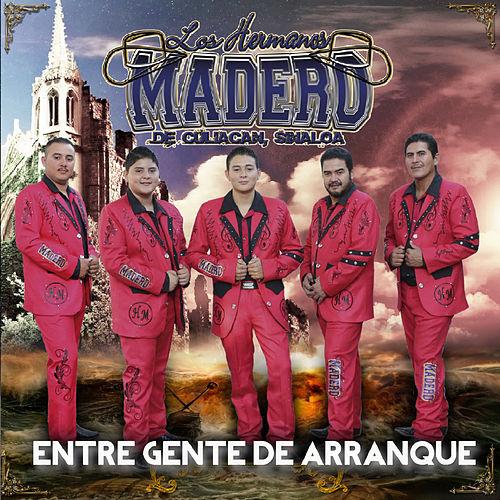 Here’s the extent of what NorteñoBlog knows about Los Hermanos Madero: They’re a five-piece family norteño band from Culiacán, playing an instantly likable mix of corridos and love songs, and their lineup includes two baby-faced youngsters, Ivan (accordion and high harmonies) and new-ish addition Aldrich (bass). Despite my assignations, they switch off instruments like The Band — one album cover has Ivan holding a bajo sexto, and in this video Aldrich plays the bajo sexto. Sometimes they use a tololoche (stand-up bass) for the bass line, a point of pride. They just released their fourth likably-photoshopped album, Entre Gente De Arranque (Cosalteco/Hyphy). It contains 24 songs and gets a bit samey; more entertaining is this video of Ivan, Aldrich, and the older Jose Luis (I think) previewing the album. Continue reading “¡Nuevo! (starring Banda Maguey, Los Intocables, y más)”



 NorteñoBlog