Search

NorteñoBlog

music, charts, opinions

Category

¡Nuevo!

Los Pakines de Perú Lose Your Mind

los pakines

This week’s videos presented NorteñoBlog with a tough choice: Trakalosa’s big-budget mini-novela about the perils of the accidental cocaine trade, or something that looks like Ed Wood’s cocaine-fueled fever dream? NorteñoBlog being a blog of largely puerile interests, you know which one I chose.

Los Pakines de Perú started in the ’70s as a groovy cumbia band, and have since added vocals and smoothed out their sound. Their latest video “Vacia” opens with a guy — we’ll call him Young Man of Perpetual Scowl (Scowl for short) — breaking up with a girl. Scowl tries to climb on top of her car as she drives away. This bold act fails to win her back, so he returns to his apartment, where visions of the young lady’s ghost keep penetrating his furrowed brow. As we’ve seen with other bands of a certain age, notably Los Cardenales, nobody wants to see old dudes learning the ways of love, so the video cuts back and forth between young Scowl’s torment and the seasoned band’s cheerful performance of a tropical cumbia, resplendent with coordinated supper club dance moves. In the next scene Scowl sits at his table smoking a cigarette and talking to a cheap stuffed bear who wears a “love” t-shirt. The nightmare begins: A doctor delivers a cruel diagnosis of “thumbs down.” A Rasta smokes a blunt. An exorcist violently expels some guy wearing a devil horns and a green goblin mask and playing a trumpet. Cut to the delirious band swaying away. Now we’re thrust into Scowl’s kitchen for the most garish sight of all: he and the ghost of ex-girlfriend have a cutesy encounter with frosting. I would rather have the devil inside me than frosting smeared on my face. I’m sure this betrays the privilege of the never-possessed, but there we are. Los Pakines’ founding guitarist takes a solo; the ghost couple takes selfies out on the lawn. We leave Scowl to scowl alone in the grass while the band smiles for the camera, refreshed by musical camaraderie. As J. Hoberman has written, “The objectively bad film attempts to reproduce the institutional mode of representation, but its failure to do so deforms the simplest formulae and clichés so absolutely that you barely recognize them.” As J. Hoberman has not written, VALE LA PENA. Literally.

La Buena, La Mala, y Las Feas

Joan-Sebastian

NorteñoBlog went on vacation at the worst possible time, because while I was gone, IT ALL WENT DOWN. Not with the music. Except for El Komander (¡VALE LA PENA!), very few notable albums came out in the past few weeks; we’ll catch up with albums and singles in the coming days. No, I’m talking about las personas en las noticias:

LA BUENA:

Joan Sebastian’s discography is a mile long. The singer, songwriter, and guitarist not only wrote over a thousand songs, from ranchera to synthpop, but he wrote and produced entire albums for other singers. This is how NorteñoBlog has encountered him in the past: as the man behind Vicente Fernandez’s irresistible “Estos Celos” and Graciela Beltrán’s “Robame Un Beso.” Sebastian was famously “el poeta del pueblo,” riding his horse on stage and representing for his gente, and that meant giving the people what they wanted, mixing up regional styles with pop sounds from El Norte and acting in the novela Tú y Yo. And then there’s this delightful factoid about the man born José Manuel Figueroa:

Mr. Sebastian’s Facebook page says that he changed his name to Juan Sebastian in 1977, and that he turned the “u” in “Juan” into an “o” on the advice of his sister, a numerologist.

Maybe a commenter can explain how that math works?

I’m still catching up with him, and probably will be for a long time. RIP

Also while we were gone, Banda El Recodo became the first banda to play on Spanish TV. If I’m surprised they hadn’t done so already, does that reveal my cultural chauvinism? This is just more evidence that the term “Latin music” makes absolutely no sense as a genre, because it tells us nothing useful about the music in question, what it sounds like, or who listens to it. Surely somewhere in the world, someone is lumping together Wiley and George Jones as “English music” — but that doesn’t make the idea any less nonsense.

LA MAL:

Put on your corrido-writing pants, it’s time for an update on El Chapo!

But the music production and distribution business has changed dramatically since El Chapo’s last escape [in 2001] — meaning times have changed on the narco-corrido front, as well. Forget six months; within six hours, bands and singers had rushed songs of El Chapo’s second escape onto YouTube and FaceBook. By Sunday afternoon, bands were recording their just-written Chapo tunes in the studio, playing the songs in front of enthusiastic live audiences and releasing elaborate videos with news coverage interspersed with dramatic reenactments of the tunnel escape.

Here are Los Alegres del Barranco:

These corridos are mostly gleeful, because El Chapo is now even LARGER than larger than life, and because of the Mexican government’s uncanny resemblance to Keystone Cops.

This musical expression points bluntly to collusion and to Mexico’s failure to run a government of law and order.

As many analysts have pointed out, the escape is a major embarrassment for President Enrique Peña Nieto, who in an interview with Univision after El Chapo was captured, said that allowing another escape would be “unforgivable.”

There’s also a Frontline documentary on El Chapo, if you’re so inclined, and Cartel Land, a documentary about the autodefensas and their less defensible U.S. counterparts, the border yahoos militias. NorteñoBlog has seen neither, but I’ll report back.

EL FEO:

¡Nuevo! (starring Mariachi Divas, Duelo, y más)

valeymargarita410

mariachi divasNorteñoBlog has never been confused about the popularity of Mariachi Divas de Cindy Shea among Grammy voters. They’re a talented group of women playing a style traditionally dominated by men — though not, let’s face it, as traditionally dominated as norteño or banda — making them a safe and progressive choice for voters with only a passing knowledge of the genre. That whiff of the “progressive” extends to their music, which boasts sophisticated arrangements that sometimes change tempos or cover non-mariachi songs. In other words, they’re progressive in the somewhat tortured sense of most genre progressives: “elevating” a style that doesn’t need elevating and appealing to people who don’t normally enjoy the style. Their Disney gig hasn’t hurt their profile, either. (“We particularly enjoy the Divas’ rendition of ‘It’s a Small World,'” says a travel site.) Their new album La Cima Del Cielo (East Side) sparkles and shines with the cheer of a sweaty theme park employee dressed up like a princess. They cover Linda Ronstadt’s “Lago Azul.”

dueloNo stranger to the “progressive” tag, the norteño-pop band Duelo is back, reliably charting high with their Intocablish new album Veneno (La Bonita). The title single levels insults at a heartless, icy, poisonous, murderous, dream-killing (SHALL WE GO ON?) mujer with unchecked midtempo momentum. Good riff, though I wish they sounded remotely venomous.

margarita la diosaA tad more interesting is Margarita “La Diosa de la Cumbia,” who, along with the dude from Bacilos, sang the theme song for La Fea Más Bella, the novela remake that’d go on to become Ugly Betty in its U.S. incarnation. (This title sequence seems to take up an entire episode.) Her new album Sin Fronteras (Warner) is part cumbia, part feel-good pop/rock with nods to modern salsa, not unlike Bacilos. The single “Te Di Todo” could introduce a novela remake of Beverly Hills 90210.

los cuates se acabaronBreaking Bad‘s favorite corridistas (and NorteñoBlog research project) Los Cuates de Sinaloa are back to their original trio format, guitar-guitar-bass, on Se Acabaron las Caricias (Los Cuates de Sinaloa), which unfortunately doesn’t seem to have any videos yet. It’s well worth streaming, though. Second song “Que Bonita Chica” sounds especially great, with effortless bounce and unadorned groove. Likely VALE LA PENA.

los inquietosFormer hyphy/not-hyphy scenesters Los Inquietos Del Norte are back with another super-serious country song, “Como Perro Amarrado” (Eagle). Though less twee than Tierra Cali’s song of the same name, it’s nowhere near as good as Jamey Johnson’s song of the same sentiment, which somehow made emasculation sound badass. Los Inquietos just sound defeated, though if Sr. Meza ever tires of singing norteño, some fine operatic roles await him — sad clowns and all that.

¡Nuevo! (starring Banda El Recodo, Larry Hernández, y más)

mariachi el bronx

recodoTwo years ago, the last time Banda El Recodo released an album, I wrote, “Like happy families and episodes of The Waltons, all Banda el Recodo albums are alike. When you play one, you’re assured 40 minutes or so of ace arrangements and pleasant tunes in a variety of styles.” I haven’t heard all of their new album, Mi Vicio Más Grande (Fonovisa), but I may have to go back on my word. For one thing, it’s only 30 minutes long! Possibly inspired by the rambunctious spirit of their title song, a previous Pick to Click, they’ve decided to dispense with this album quickly with only 11 songs, down from the 19-song high water mark of 2009’s Me Gusta Todo de Ti. But that’s OK, NorteñoBlog likes short albums. Worse news is that aside from “Vicio,” the songs I’ve heard suck. “Todo Tuyo” may have been a hit but it defines the idea of a nothing ballad, sucking brain cells into its void. Nor do the other two advance tracks seems designed to stick, whether it’s songwriter Freddy Osuna enjoying “La Miel de Su Saliva” or the sage songwriting team of Luciano Luna, Joss Favela, and Miguel Angel Romero skipping through “De Haber Sabido.” By now bandleader Alfonso Lizárraga has proven he can simply spin Recodo’s wheels, releasing an album with the requisite two hits (“Vicio” has gone top 20 on the Hot Latin chart) to keep the brand going.

hernandezNorteñoBlog has previously been bewildered by the prolific career scope of psychedelic corridista and family man Larry Hernández, whose new Vete Acostumbrando (Sodin/Fonovisa) dropped two weeks ago. In contrast to the somewhat unofficial “got purp” feel of his last album 16 Narco Corridos Vol. 2, Vete is an official hitmaking release full of romance and obsession and a Gerardo Ortiz duet. At only 10 songs (NorteñoBlog cheers!), most of which are good, none of which stand out, it’s less of a chore than either new album by Ortiz or Recodo. Hernández doesn’t innovate his genre like Ortiz, and he doesn’t even sing as well — listen to the fine quartet ballad “Ya Me Cansé” and you might think he’s coughing up his lyrics. But he zips through his music with unabashed and unpretentious pleasure. On my loosely ranked list of favorite albums of 2015, Hernández sits next to Kid Rock, which seems about right. Plus my awesome librarian Gloria likes him. I’ll confer Pick to Click status upon the banda firecracker “Aferrado Corazón,” which features Hernández not quite reaching his high notes in a very appealing way.

komander eleganteEl Komander yadda yadda another single blah blah blah not really trying any more but that’s integral to his charm yak yak yak. But — what’s this? — Sr. Riós seems pretty invested in his sixth (?) official single in as many months. It’s called “El Elegante,” it’s fast banda and barely a song, but it does herald his forthcoming album for Twiins Enterprises, Detrás Del Miedo. Due July 7th! I’d say reserve yourself a copy, but let’s face it: such effort would hardly keep with the spirit of Komander’s recent loosey goosey output. Although to be fair, the guy’s released a single per month in 2015; what have I done?

mariachi el bronxThat sort of existential uncertainty hangs heavy over “Wildfires,” the new Mariachi El Bronx single on ATO. Wait. No it doesn’t. Mariachi El Bronx sounds like fucking Fastball. Let’s be clear here: NorteñoBlog is not categorically opposed to U.S. pop appropriations of regional Mexican styles. More such appropriations might be welcome, because horns and strings sound great on the radio, and the people of El Norte need to learn these styles. The members of Mariachi El Bronx have doubtless studied more mariachi music than I have. Some of them are Latino. They play their instruments well. But let’s also be clear: they’re not playing mariachi music. They’re using mariachi as a gimmick to sell tickets to indie rock shows, same as Cake uses a trumpet. (Sometimes I like Cake.) If white hipsters go to Mariachi El Bronx shows to gawk at music that’s “cute” or “indigenous,” or if white hipsters leave Mariachi El Bronx shows thinking they suddenly know something about mariachi music, I suppose that’s the white hipsters’ problem, but I wish I had more confidence in Mariachi El Bronx to combat the problem. Ultimately though, I’m ragging on Mariachi El Bronx because of my longstanding disinterest in rote indie rock songs. (Plus, the lead Mariachi sings with a tenth the authority of George Strait; but then, don’t we all.)

¡Nuevo! — starring Chiquis Rivera

tlmd_jenni_rivera_chiquis

Imagine trying to live up to the legacy of Jenni Rivera. There’s never been anyone like her. Her personality — commanding, ribald, sexy, romantic, hilarious — burned through every note of her music. Her songs became inseparable from the public persona she shared on TV; and her sharp business acumen, the will that drove her to succeed, became integral to hearing her. Her success in a male-dominated field added to her complexity. She made herself into an object of longing and fear to both women and men. To aspire to Rivera’s level of command was to welcome the terror of never getting there.

chiquis ahoraAt Billboard Angie Romero offers a track-by-track analysis of Chiquis Rivera‘s new album Ahora (Sony), along with an interview. Not having read Chiquis’s tell-all memoir, NorteñoBlog isn’t fully up to speed on all the difficulties of growing up with Jenni Rivera for a Mom. But I fully sympathize with the daunting task of needing to make music in her wake. “‘I don’t think that I sing like Celine Dion, but I’m not a horrible singer,’ Chiquis tells Billboard. ‘I was watching a video the other day of my mom when she was first starting. She grew into this monster onstage, she really dominated it, but it wasn’t always like that. People forget that.’” Exactly! Chiquis has a fine voice and there’s plenty to like about her songs, especially fast ones like the singles “La Malquerida” and “Completamente.” She gets into some swanky electro-pop like “Paloma Negra,” a duet with Julio Reyes that also serves as a backhanded tribute to Mom (Romero says Rivera previously dedicated the Mexican standard to Chiquis after they had a major falling out). Chiquis’s music stands in Rivera’s unavoidable shadow, but it frequently acknowledges that shadow, a Jenni hallmark: don’t try to separate life and art! And in her forward-thinking mix of banda and pop, Spanish and English, Chiquis points her own way out.

VALE LA PENA

¡Nuevo! (starring Los Alegres, Los Alcapones, y más)

camacho fernandez

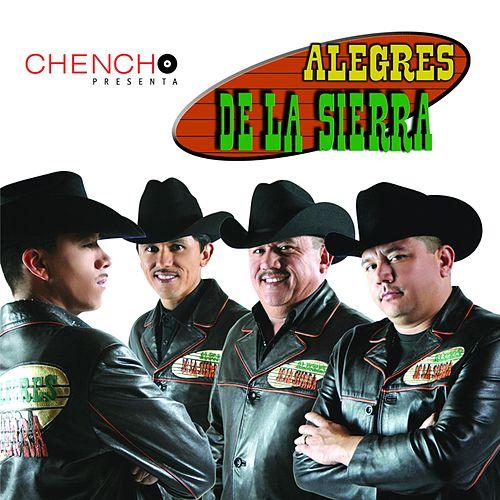
los alegresLast week NorteñoBlog noted that, when Los Cuates de Sinaloa were getting popular about a decade ago, Billboard hailed their guitar-based “musica de la sierra” as one of Mexico’s “new sounds” to keep an eye on. In the same milieu were Los Alegres de la Sierra, another family band who, from the looks of my hasty research, never made the jump to a major label but branched out musically just like Los Cuates did, adding members and instruments. Their self-released 2012 album Lagrimas En La Sierra is chipper accordion quartet stuff, new to streaming services, and I’m partial to “No Podrán.”

los alegres del barrancoSimilarly chipper and altitudinally minded, Los Alegres del Barranco have released a new single, the corrido “El Chino Piloto” (Hyphy). It’s chock full of fatalistic loneliness and helpful radar-evasion tactics, and its repeated eight-bar melody will dig a six-inch barranco through the middle of your skull.
Continue reading “¡Nuevo! (starring Los Alegres, Los Alcapones, y más)”

¡Nuevo! (starring Banda Cuisillos, Los Huracanes, y más)

cuisillos feathers

huracanesWith a career nearly as long as Los Tigres’ and a catalog just as intimidating, San Jose’s own Los Huracanes del Norte have been playing their corridos and love songs for more years than I’ve been alive. Longevity is part of their story. So naturally, their new album on GarMex/Universal is titled #. The cover, you see, is festooned with a bunch of Twitter hashtags you can use to spread your love of Los Huracanes, and most of them seem legit, although tweeter beware: when I looked up #queseoigaesebajosextomipancho, I didn’t get any results. You can be the first, I guess. All those hashtags make for an attractive album cover, and my keen-eyed friend Anthony likes the font they used. Los Huracanes have already hit the U.S. radio top 20 with “Como Tu No Hay Dos,” a sad country waltz played amid a surreal video landscape of inverted toilet plungers. Their reach also extends to #Manástylepopballadswithsopranosaxleads, as evidenced on last year’s #1 “Cero a la Izquierda.”
Continue reading “¡Nuevo! (starring Banda Cuisillos, Los Huracanes, y más)”

¡Nuevo! (starring Banda Culiacancito y El Güero)

culiacancito

A while back NorteñoBlog mentioned two bandas had cut versions of El Diez’s new corrido standard “El Karma,” and that both bandas sounded drunk. As top commenter Manuel suggests, this isn’t the best aesthetic choice for the song, which is fundamentally about jealousy and fatherly love ending in death. But maybe barreling through the tune with a sloshed banda helps ease the pain. Anyway, now that one of those bandas, La Séptima Banda, has gone on to blanket the airwaves with the leaning Tower of Power homage “Bonito y Bello,” what’s become of the other? Wait no longer. Banda Culiacancito now has a video for their Pick to Click single “Lástima de Cuerpo” (Del/Sony), revealing another reason they need to ease the pain: a cheating mujer. Oh dear. If you’ve read this blog long enough, you know one of my favorite musical effects is rapid fire barrages of syllables that never seem to end and make me feel totally inadequate about my grasp of español. Prolific songwriters Geovani Cabrera (Regulo Caro, Calibre 50) y Horacio Palencia (todos) deliver. Knock yourself out with a trombone slide!

el gueroMilwaukee’s own El Güero is back with su Banda and a new single, “Amor En Secreto” (A.R.C.). More pain, more stolen love, but this lachrymose ballad goes out to the wallowers among us.

¡Nuevo! (starring Gerardo Ortiz — ¡Hay No Más!)

hoy mas fuerte

As you know if you’ve passed within 10 feet of a computer this week, Gerardo Ortiz has a new album out! (Maybe his pop-up ad onslaught only hits people with my peculiar computing habits.) Hoy Mas Fuerte (Del/Sony), his fifth studio album, is the work of a highly accomplished musician who’s transcending his genre and knows he’s in rarefied territory. He’s come a long way since 2010, when he was associated with El Movimiento Alterado and his debut CD’s booklet featured the anonymous band wearing ski masks and the phone number of somebody named only “Junior.” Since then, his hit song “Dámaso” — the best pop single so far this decade — and his fourth album, Archivos de Mi Vida, have made Ortiz the biggest name in regional Mexican music. He’s all over radio, he plays (and often opens) every awards show, and his face is at the center of radio billboards. No more ski masks or grenades in his logo; he’s got a reputation to uphold.

This is good news for Ortiz and possibly for the norteño genre, where Alterado’s ultraviolence has worn thin aesthetically and commercially, and, frankly, where too many singers have lately been shot. (“Too many” as in “more than zero.”) Billboard reports that Ortiz will tour with one of them, Alfredo Olivas, who’s on the mend, thank goodness — NOT that Olivas is affiliated with any cartels. The question is, will Ortiz’s new idol status benefit his music? If Hoy Más Fuerte is any indication… maybe, but not yet.

Fuerte furthers Ortiz’s idea of a movement devoted to progressive corridos, or “Corridos Progresivos.” My gringo friends, this is not “progressive” like progressive rock. There’s no songs with Roman numerals or harpsichords in Ortiz’s music (yet), and the songs are still short. It’s more like progressive rap. The music is more lush — not quite PM Dawn levels of lushness, but at least Arrested Development levels. The band is trying things that typical norteño bands don’t allow themselves — the rhythms switch up more often, the accordionist slides through chromatic passages that sound vaguely like he’s playing a French cafe, and the bajo sexto player plays a lot more notes than, say, Luis Hernández does. I haven’t yet seen credits for the band, but whoever they are they’re accomplished and subtle, and Ortiz has always hired some of the best players in the biz. The recording sounds great, too; Sony obviously spent plenty of money polishing the band’s sound until it gleamed.

The problem is with the songs. After half a dozen listens, nothing sticks with me except for the big ballad, “¿Por Qué Terminamos?” While everything is pleasant to hear again, I don’t need to hear anything again. Possible exception: the bachata tune “Contigo,” which is better than Calibre 50’s “Contigo” even if it’s not as good as Ortiz’s previous bachata. Maybe this will change, but right now Fuerte combines a remarkable increase in musical skill with a corresponding decrease in vibrant energy. Ortiz and his band have always been professionals, but now they’re embracing the world of professionalism.

Two rock critic concepts are worth considering here:

Within his genre, Gerardo Ortiz is enjoying his Imperial Phase, and has been at least since the 2013 release of “Dámaso.” Explained Chris Lowe of the Pet Shop Boys, the band who coined the phrase: “It means you can do what you like, usually followed by disappearing up your backside!” Taylor Swift is also enjoying an Imperial Phase, though her rule extends over all of popular music. Ortiz and Swift are both in the zone, and they can be fairly certain that whatever they release will connect with a wide audience. In pop, audience goodwill eventually dries up and the phase ends. Whether the Imperial Phase works the same in norteño, where the audience still reserves a central place for Jenni Rivera several years after her death, remains to be seen.

It’s also too soon to tell whether Fuerte will prove Ortiz’s New Jersey (i.e., the Bon Jovi album): a hit album that follows another huge hit, scores some hit singles of its own, but ultimately feels like the beginning of a major drop in the artist’s standing. We won’t be able to tell until the next Ortiz album, when we realize how inconsequential “Terminamos?” and “El Cholo” feel to the rest of his career. I’m not saying this’ll happen. I’m just saying.

What’s remarkable is that this corridista is inviting these comparisons at all. As a gabacho, I often compare norteño artists to pop and country artists, since that’s my frame of reference. In the case of Ortiz, though, both artist and record label are blatantly reaching for those sorts of comparisons. Not that Sony is marketing Ortiz’s music to gringos — although in my corner of the internet they are — but in press releases they’re clearly positing him as a giant in his field, progressing artistically, innovating, “taking steps.” It’s impossible to imagine a record label saying such things about Los Rieleros del Norte, for instance, who release the same good album every year or so. Even last year’s return of Los Tigres didn’t seem much different than the push for any other long-running corrido band, aside from the news of their GLAAD award, which they downplayed in their modest blue-collar manner. Ortiz represents a new or at least recent phenomenon: norteño music infused with pop technique and marketed with pop savvy. The songs are almost beside the point, and there lies his downfall.

Blog at WordPress.com.

Up ↑