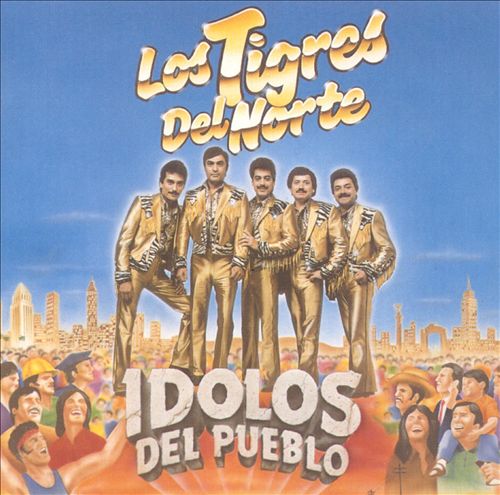
And not a moment too soon! The Singles Jukebox finally wrote about Los Tigres and their extended (and SAXY) pickup line “Qué Tal Si Eres Tú.” It’s an unorthodox introduction to their storied career, but in my opinion it’s as good as any:
…aka, the one where Hernán Hernández sings triplets, the one where Óscar Lara plays two different drum patterns, and the one with ALL THOSE MINOR CHORDS. I know I’m missing stuff, but after they’ve spent 40-odd years sifting through subtle shades of dry bounce, “Qué Tal” resembles a great Saguaro-like flowering of Los Tigres’ sound.
Fellow Jukeboxer Tara Hillegeist wrote well about the subtleties of bajo sexto playing and prompted me to listen again.
Desde el filo de la sierra
Viene la historia que traigo:
Que por esas tierras
Suelta anda una fiera
Entre aquellos pinos altos…
From the edge of the sierra
Comes the story that I bring:
Through those lands
Freely walks a beast
Among those tall pines …
Plenty of corridos begin in a similar manner, of course, establishing their (anti)heroes as larger than life figures. But Noel Torres’s new single on Gerencia 360, “No Andan Cazando Venados” (“Don’t Go Hunting Deer”), opens with knowing mastery of the form. Torres begins by placing himself into the story as storyteller, thus joining the long historical line of corridistas, stretching back not just to Ramon Ayala but to Homer recounting the tales of brave Ulysses. (“Tell me, O Muse…”) Then things get scary. I admit I shuddered when I got to the part about the beast roaming through the tall pines — it’s such a contrast with the folksy opening, and “fiera” arrives at the end of its line with a jolt. Torres reclaims the word’s savagery. (I swear, if I hear one more TV chef tell me he’s “a beast in the kitchen”…) Now I just need to figure out the rest of the song. Something to do with the DEA and big-ass guns. The translation service is limited help in this case.
The song was written by El Diez and Danilo Avilés. El Diez is the shadowy figure who wrote the equally mythic “El Karma,” recorded most iconically by the late Ariel Camacho, but also by Torres and lots of other people. Avilés wrote the second song on Camacho’s El Karma album, and Torres’s arrangement of “Venados” sounds like he’s adapting Camacho’s unusual instrumentation. He takes stripped down passages of requinto guitar solos over lurching tuba, the same dynamic you find in Camacho’s repertoire, and alternates them with full banda sections. Horns replace rhythm guitar. The result is both serious and silly (ay, esos clarinetes), a fitting tribute that also fits with Torres’s swagger. Pick to Click, obviously.
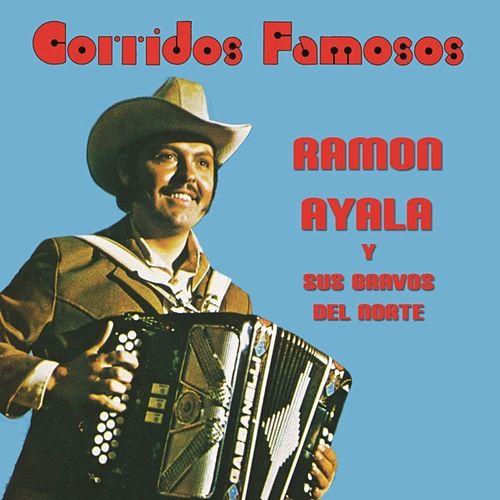
Should you develop a hankering to delve into corrido history, the Freddie label has released a new Ramon Ayala comp entitled Corridos Famosos. Ayala’s muse speaks to him the tales of brave Gerardo Gonzales, Juanita y Miguel, y otros. No idea how this compares with other Ayala compilations out there.
If we’re already talking (probably) unnecessary cheapo Ramon Ayala reissues, you may have guessed it’s a light week for albums. You’re right! The singles, though, they never stop. Fonovisa has recently sent to radio new work from some of its heaviest hitters. Los Tigres are back with their third Realidades single, the midtempo waltz “Hoy Le Hablo El Diario,” which does the thing where the rhythm section rushes the second beat of every bar so the waltz feels slightly nauseating. In a good way. If you like beards and flannel and don’t wanna move to Seattle, Codigo FN has a slow one out called “Pinche Vieja Interesada,” which is less interesante than its title. Better are the new Proyecto X corrido “5 Letras,” reeling off verse after verse like a gold-plated machine gun eating up magazines, and Remmy Valenzuela’s very stripped-down chiquitita ballad “Menti,” in which his accordion seems capable of breath and thought.
But who needs major label distribution when the internet frontier beckons musicians to simply release their own music? Tejano singer Bobby Pulido has been on the scene since the mid-’90s, and his new “Si No Te Hubiera Conocido” is a likable walking tempo number that could’ve come from Intocable — but does Intocable have its own line of Western wear (see top of page)? I submit that Intocable does NOT.
The equally breezy Los Grandes de Tijuana DRANK YOUR LOVE! Just drank it right up. Los Grandes are also ’90s music lifers, and “Me Bebi Tu Amor” has the lazy front-porch-with-squeezebox vibe of Bob Dylan’s Tejano album Together Through Life, still my favorite of his post-’70s catalog.
NorteñoBlog swooned when Gerardo Ortiz mixed up the banda with the bachata in “Eres Una Niña,” and now I hear Omar Sánchez Omi trying something similar on “Tu y Yo.” Rhythmically it doesn’t vary too much from Recodo’s romantic moods, but Sánchez’s voice is husky and swarthy like King Romeo’s and could have some of the same R&B appeal, if enough people hear him. Sánchez used to sing for Chicago’s Alacranes Musical, one of my favorite duranguense bands, and there exists a photo of him dressed up like Santa Claus and standing next to Diana Reyes, so I’m pulling for him.
If you felt an inexplicable throbbing in your heart earlier today, it wouldn’t hurt to get that checked out, but it could have just been the psychic palpitations that inevitably result when young Luis Coronel appears in the media, since we wrote about his single “Cuando La Miro” at the Singles Jukebox. Of course, if your heart is that affected by Luis Coronel, it wouldn’t hurt to get that checked out either. Sez me. I should probably go easy on the guy for a while:
I won’t sugarcoat it: this won’t be the last you hear from Luis Coronel. Triunfo magazine reports the bilingual Tucson teen plans to eventually “make the crossover and record in English.” His videos feature English-speaking restaurateurs, ’50s diners, and muscle cars, meaning he’s already singing to a bilingual U.S. audience; whether his crossover turns out to be Prince Royce-style assimilation, or the thing that finally drags banda/norteño music into Top 40’s embrace, is anybody’s guess. But no matter what Coronel sings, he needs to do something about his voice. Or lack thereof. Forswearing both the nasal whine and the overwrought (i.e., perfectly wrought) romanticism of his forebears, Coronel sings everything as though he’s reading the phone book. He can barely hang on to his songs. His hapless vocal cords tossed about by his (generally really good) arrangements, he makes even the simplest lines sound hard to scan. “Cuando La Miro” strands Coronel in his midrange; except for that shouted “Chiquitita!” he’s confined to six notes, none of which he projects over the brass. Maybe that’s why people love him? Like his unaffected peers Kevin Ortiz and Jonatan Sanchez, Coronel transforms music that’s often violent and racy into the endearing genre next door. He may someday portray the Pat Boone character in Elijah Wald’s How Calibre 50 Destroyed Narcocorrido.
Most other reviewers liked the song more: common themes included the goodness of the banda players and Coronel’s propensity to hide his vocals behind them. “Cuando” is currently #10 on Billboard‘s regional Mexican chart.
Last week NorteñoBlog recommended “Cerveza” by the cruel drunks in Banda Cuisillos. It turns out “Cerveza” has garnered one of the 20 biggest radio audiences in México but, due to some chart formulas I don’t quite understand at the website monitorLATINO, hasn’t yet hit the radio top 20, which measures total spins rather than estimated audience. (This could just mean it’s more popular in urban radio markets, where more people will hear its fewer spins…???)
ANYWAY, my point here is not to reveal how little I know about Mexican radio stats, but rather to direct you to two more such songs. The first is “Te Extraño Poquito” by Claudio Alcaraz y Su Banda Once Varas. It’s got breathless banda bombast and Alcaraz moving through increasingly desperate stages of post-breakup grief until, in the video, he goes Lloyd Dobbler on his ex and shows up outside her window with the entire banda. Neither ex nor neighbors call the police; rather, ex turns out the light, so everyone just gives up and goes home. Continuará…
Popular but less-spun song two is the charming “Amanece Y No Estas” by Diego Verdaguer, who splits the difference between mariachi and Jason Mraz-style hippy dippiness. No ukelele though, promise.
But today’s Pick to Click is yet another top 20 single from NorteñoBlog’s album of the year so far, Marco A. Flores’s Soy El Bueno. “Dudo” is more of Flores’s trademark Sinaloan banda played at Zacatecas speed. He uses pop chord changes but avoids sentimentality, mostly because he’s got a voice like a tornado siren playing a wax paper comb. The song lasts all of 2:48. I swear this record’s like the Ramones or someone.
Other newbies include ballads by Saul “El Jaguar” and Luz Maria, and something by Los Titanes de Durango featuring 14-year-old Jaziel Avilez. Being a sucker for such novelty and having once enjoyed Los Titanes, who despite their name play plain old norteño and not duranguense, I so wanted to like this song, but “Padre Ejemplar” goes on way too long. 40 seconds longer than “Dudo,” to be exact. Talk about self indulgence!
These are the Top 20 “Popular” songs in Mexico, as measured by monitorLATINO. Don’t confuse “Popular” with the “General” list, which contains many of the same songs but also “Uptown Funk!”, “Sugar,” “Love Me Like You Do,” and an Alejandro Sanz ballad about scratchy-voiced zombies.





 NorteñoBlog