Search

NorteñoBlog

music, charts, opinions

Author

joshlanghoff

A Brief Timeline of Grammy’s Norteño Neglect

Last week I wondered why the Grammys hate norteño music — hint: it’s the money — but maybe you’ve wondered how the Grammys have grappled with this issue over the years. Wonder no longer! (Well, wonder at your leisure, because I won’t claim this timeline is complete.)

As we travel through the years a familiar story emerges. The National Academy of Recording Arts & Sciences (NARAS) doesn’t quite know how to reward one of its subgeneres — norteño is far from unique in this regard — and so they cast about trying to figure it out. As they do, NARAS repeatedly confronts an uncomfortable truth: a reward system designed, in the words of award watcher Thomas O’Neil, “to remain truly academic in nature, free from all commercial pressures… where its members could discuss and reward great music as it should be,” might not be the best system for rewarding mass-produced commercial music.

A truly existential dilemma. (It’s akin to a state governing body whose members believe government is the problem and not the solution — but where were we?)

Variety discovered this dilemma at the first ceremony in 1958, when rock ‘n’ roll received zero nominations (“Over the pomp and circumstance of the festivities hung a cloud…”). Rap and metal would later feel the snub. Over the years telecast performances have become more important sales boosters than the awards themselves, a dilemma of its own — are the performances also supposed to represent the best music of the year?

Because of the language barrier, the dilemma looks a little different when we get to norteño, but it’s the same at its core. Music industry professionals, sensitive to how music portrays their livelihood to outsiders, often have terrible ideas about what constitutes great music. And all genres share an essential truth: self-regarding “real musicians” are fucking annoying.

To the timeline!

1983 (Album of the Year Thriller*): NARAS splits the Best Latin Recording category into three performance categories: Latin Pop, Tropical Latin, and Mexican-American. We’ll keep an eye on that last one. It contains no norteño nominees the first year — they’re all ranchera and Tejano, with Los Lobos winning the statue — but eventually the category will latch on to Los Tigres, who win the award in 1987 (AOTY The Joshua Tree).

1990 (AOTY Back on the Block; Best Mexican-American Performance by the Texas Tornados): During a trip to Mexico City, NARAS chair Michael Greene proposes creating a Latin Academy of Recording Arts & Sciences, with its own Grammys and everything.

As Ramiro Burr reports to Billboard in 1996 (AOTY Falling Into You), this is no small undertaking:

“It turns out we didn’t know anything,” [Greene] said. “It has taken us five years to bring us to this point.”

Which point is that?

“We are now interviewing for an executive director position,” he added. NARAS is perhaps best known for presenting the Grammy Awards, considered the most prestigious awards in the music industry, but the academy also works on improving professional standards through outreach programs and educational seminars and offers workshops on such issues as copyrights and intellectual property.

“LARAS will be the Latin American Academy for Recording Arts and Sciences, and it will be for the people in the U.S., Mexico, Central America, South America, the island countries, and Spain, who are practitioners either creatively or technically in the Latin music community,” said Greene. “This would very much be a parallel organization to the American academy.”

Greene went on:

“[LARAS is] a very ambitious project; that’s why it has taken so long. One incredible thing that I don’t think people realize is the diversity of the music when you get into regional music forms.”…

This is one of Grammy’s perennial questions: how many different categories should they have? Not just how do you compare apples to oranges, but do chayotes get their own category?

Well, if the chayotes have enough clout…

The growing influence of the Texan music industry sparked the movement to not only establish the Texas NARAS branch but to create a Tejano music category in the Grammys.

In 1996 the Mexican American award becomes Best Mexican American/Tejano Music Performance. Tejano band La Mafia promptly wins.

Norteño musicians just need better lobbyists.

1998 (AOTY The Miseducation of Lauryn Hill): At Billboard, John Lannert lobbies for norteño musicians in an article entitled “Latin Grammys Still Stuck In Rut”:

Prestige and artistic confirmation must be the prime reasons why the Grammy Awards are so important to U.S. Latino artists and record labels.

What other motives could there be for a Latino act to covet the honor? Certainly a Latin Grammy does not enhance album sales, as the award does with many Anglo Grammy winners. Even a Latino superstar’s record sales seldom benefit from winning a Grammy statuette. With the televised portion of the Grammys rarely spotlighting Latino stars in action, viewers are not exposed to their talent.

He singles out the Mexican American category for criticism:

Take, for instance, the confusingly named category best Mexican-American/Tejano music performance. This travesty of a category consistently omits such top norteno acts as Los Tucanes De Tijuana and Grupo Limite.

Now, who knows how much John Lannert has to do with this, but later that same year, change is afoot! Sort of afoot. The Latin categories expand to five, notably spinning Tejano off into its own category. Flaco Jiménez wins the Tejano award; the supergroup Los Super Seven, which includes Jiménez and other Tejano musicians, wins Mexican American Performance. Norteño performers once again lose. Small steps.

2000 (AOTY Two Against Nature): After a decade of planning, the Latin Grammys finally arrive! Broadcast live on CBS during prime time! In their own ceremony, Latino superstars receive the attention they deserve, and among many others, there are categories for “ranchero,” banda, grupero, Tejano, norteño, and regional song. America’s most popular Latino genre — norteño — finally enjoys its day in the sun. OR NOT… Billboard‘s Leila Cobo suggests otherwise:

In the end, despite to-be-expected grumblings, few could argue about the merit of these first nominations. But when it came to choosing who would actually perform during the two-hour awards program, the Latin Grammys fell short on several counts. The most patent was the absence of regional Mexican acts, pointed out by California-based Fonovisa, which specializes in regional Mexican music.

“The majority of Latins in the U.S. are Mexican or of Mexican descent,” says Gilberto Moreno, Fonovisa GM. “So, if you exclude Mexicans and Mexican music, it’s not a show made for the majority of Latins.” Referring specifically to popular Mexican music, he adds, “There isn’t a representative of popular Latin music.”…

This wasn’t limited to the awards alone. There was no sign of the music in anything leading up to the ceremony. Should there have been? Yes, to give the music credit it rarely gets in the mainstream and, frankly, to appease everyone involved, especially during this groundbreaking first Grammy ceremony. The reason Moreno’s words found resonance in media outlets across the country was because he had a point.

Well, OK. But don’t forget the Tito Puente tribute!

Here we see where the language/cultural barrier comes into play. CBS broadcast this show to all America, Latino and gringo alike, and you can imagine the pressure on producers to schedule performers who’d command a large audience. Hence the inclusion of known-to-gringo quantities like Santana, Christina Aguilera, Miami Sound Machine, and ‘N Sync. In a sense, the show’s producers played up a hot-footed tropical stereotype. In the words of Narcocorrido author Elijah Wald, “Americans have historically turned to Latin music for its African rhythmic power, and that is simply not what most Mexican regional music is about.”

2003 (AOTY Speakerboxxx/The Love Below): Cobo concurs:

Additionally, performances have been a particularly sensitive issue for the Latin Grammys. This is because it is a predominantly English-language show that airs on an English-language network but honors Spanish- and Portuguese-language music.

As a result, the awards try to balance what could appeal to the masses with what is authentic to Latin audiences.

But is performing at the Latin Grammys even worth it? Cobo thinks not:

Those performances, however, come at a steep price that many say is not compensated by the sales generated.

“It’s very prestigious to perform, but as far as sales [go], we’ve seen a step forward as a result, not a jump,” one label rep says.

Labels have to foot the entire bill of showcasing an act at the Latin Grammys, including transportation, per diems and rehearsals. Depending on the level of production involved, costs can range from $40,000 to $100,000 and beyond per performance.

This complicates the complaints, by Gustavo Arellano and others, that the rewards overlook regional Mexican genres. On the one hand, yes, a truly representative award show would feature norteño and banda performers because they’re immensely popular. (And the Latin Grammys do — the awards feature about three such performances a year. They’ve improved since their disastrous start in 2000, although the 2014 edition took a step back, with only one banda thrown in among all the pop stars.) On the other hand, as John Lannert noted with the awards themselves, what’s the point? If it costs the label tens of thousands of dollars to stage a performance and the sales bump is negligible, why would a label want their act to perform at the Latin Grammys? Apart from the prestige factor?

Again, we’re back to the Grammys’ existential dilemma. The LARAS introduction reads:

The Latin GRAMMY Awards aim to recognize artistic and technical achievement, not sales figures or chart positions, with the winners determined by the votes of their peers — the qualified voting members of The Latin Recording Academy.

A main purpose of the Latin GRAMMY Awards is to recognize excellence and create a greater public awareness of the cultural diversity of Latin recording artists and creators, both domestically and internationally.

It’s all there: Excellence! Achievement! NOT sales figures or chart positions! The heart swells. But you gotta ask: if this altruistic endeavor makes record labels pay to stage their performances, who gets left behind? LARAS effectively disqualifies most indie groups from performing at the awards show, simply because their labels can’t afford it. Correct me if I missed something, but I don’t think the vital Gerencia 360 or Remex labels have ever sent an act to play the Latin Grammy ceremony. If their acts achieved more excellence than some major label act, tough chayotes. Which is it, Latin Grammys? Rewarding excellence or getting viewers and dollars?

Also, does either Recodo or Arrolladora really make the most excellent banda album every year? I submit that in most cases THEY DO NOT.

2007 (AOTY River: The Joni Letters jajaja): Progress! NARAS adds the category Best Banda Album to the Grammys. This continues for five years, and the nominees include some duranguense acts like K-Paz de la Sierra and my beloved Alacranes. In 2009 (AOTY Fearless) NARAS goes one step further and adds the category Best Norteño Album. Los Tigres win it twice in a row, followed by Intocable, and then in 2012 (AOTY Babel ay) the categories merge into Best Banda or Norteño Album, which still has merit. Los Tigres win. And then, after taunting us for a few years, everything goes to hell…

The dozen or so musicians and activists delivering the signatures are part of a considerably large (didn’t you hear us say 23,000?) group of disgruntled musicians and music industry employees who have been protesting the NARAS’ controversial cuts — which included awards for Latin jazz, regional Mexican/Tejano, banda/Norteno, and hard rock/metal, in addition to gender-specific categories in pop, R&B, rock, and country — since June of last year (did we mention they added contemporary Christian music in the Gospel category?). Back in August, four Latin jazz artists even filed a lawsuit with the [New York] Supreme Court, claiming that the eliminations had negatively affected their careers, and that the organization was violating its “contractual obligations” to its members.

The lawsuit was dismissed, and here we are: back to one category, Regional Mexican Music Album (Including Tejano). This year I guarantee you the winner will be a well-performed and well-recorded ranchera/mariachi album that you could play at a stodgy dinner party, because that’s all that’s nominated. (Last year Recoditos, Intocable, and Joan Sebastian were nominated, though the album went to the Mariachi Divas de Cindy Shea, good for them.) As I pointed out last week, Gerardo Ortiz would gain new crossover fans if he sang his gorgeous “Eres Una Niña” (released during the eligibility period) on the show, maybe in a duet with Prince Royce or King Romeo. But Ortiz’s NARAS peers evidently have other ideas about what constitutes the best in their industry.

Not to take anything away from Juanes’s achievement, but which is it, Grammys? Rewarding excellence or gaining viewers and dollars? (And in the case of Juanes’s “Juntos,” terrible Disney dollars at that.) In the end, artistic excellence goes unrecognized, and a new generation of performers learns they can get along just fine without the Grammys.

* Albums of the Year are listed according to their eligibility period, not the calendar year in which they won the award. This may cause some confusion, especially when we get to the Latin Grammys, which have a different eligibility period than the Grammy Grammys. You get the gist.

¡Nuevo! (starring Arrolladora, Incomparables, y Juanes)

juanes running

Since Juanes is a Colombian guitar hero, he’s not exactly NorteñoBlog material, but today I’ll make an exception. After all, Loco De Amor was one of 2014’s best albums, a career high for the singer-songwriter, and now I see he’ll be singing his new song “Juntos” at this Sunday’s Grammys — y él estará cantando EN ESPAñOL! Besides his countrywoman Shakira, who’s busy nesting with a new baby, there are few Latino superstars better poised for such a breakthrough. Juanes has already played an all-Spanish concert on The Today Show, and his music is straightforward pop/rock with just enough touches of tropical rhythm and instrumentation to set him apart from, say, Sting. Unfortunately (you knew this was coming):

1. “Juntos” sucks. It’s toothless ska that would have been the eighth-best song, at most, on Loco De Amor.

2. It’s from the soundtrack to a terrible looking Disney movie where Kevin Costner plays the fish-out-of-water white hero to a Latino cross-country team, much like that movie where Jon Hamm recruits Indians to play… baseball, was it? I don’t feel like researching these movies, partly because the “Juntos” video contains a money shot of Costner staring skeptically at someone’s backyard rooster. Get it? OK, yes, roosters are naturally hilarious, but owning them isn’t. They and their harem provide eggs, companionship, and valuable childhood lessons about death. I’m pretty sure my (gringo) Mom had chickens growing up in central Missouri, and I know several (mostly gringo) Chicago suburbs have been lobbying for chicken-friendly zoning laws. Backyard chickens and roosters just make sense. If you’re gonna stereotype a whole group of people, at least get your signifiers right! This movie seems calculated to please the same people who’d enjoy that ridiculous McDonald’s commercial that currently precedes the “Juntos” video, the one where they encourage you to dance for your food. It’s not overstatement to say that McDonald’s, Disney, Kevin Costner, “Juntos,” and Juanes are complicit in hastening the end of civilization.

Um, watch the Grammys! Big moment for Juanes. For all of us.

Arrolladora-Banda-El-Limon1-300x300Speaking of civilization in demise, La Arrolladora Banda El Limón drop a new album called Ojos En Blanco (Disa) this week. Its terrible lead single “Lo Hiciste Otra Vez” has already gone top 10 in both México and El Norte. (The song was written by newcomer Tláloc Noriega, who also landed the more swingin’ “Disculpa Corazón” with La Poderosa Banda San Juan.) Alert listeners and readers will remember these guys aren’t always terrible, especially when they sing Espinoza Paz songs: “Cabecita Dura” was a jam and “El Ruido de Tus Zapatos” led to a heightened state of awareness at least once.

incomparablesIn corridos, Los Incomparables de Tijuana released their 18th-or-so album Caro Quintero Soy (Sony), with a lead single of the same name, sung here in spellbinding duet with another band, Los Nuevos Rebeldes. (PICK TO CLICK!) Come for the big bushy beard; stay for the part in the middle where they put down their instruments and shout out their respective bands.

evolucion 360The Gerencia 360 label just put out a two-volume sampler called Evolution 360, featuring acts I know and love and included on 2014 year-end lists, including Noel Torres, Adriel Favela, and Martin Castillo. They also handle Helen Ochoa, pretty boy Jonatan Sánchez, Grupo Escolta, and a bachata dude named Yenddi, whose album The First Chapter drops this week.

And what would norteño music be without redundant and excessive exits compilations? Sony and Disa are flooding the market this week, with comps by Vicki Carr, Cornelio Reyna, Conjunto Primavera, Calibre 50, Recoditos (that one might be a lot of fun) — I won’t list ’em all, but they’re out there, cluttering up a discoteca near you.

Desfile de Éxitos 2/7/15

banda ms

Compared to how inert they’ve been, the charts are packed with action this week, almost as full as they’re packed with Romeo Santos. (To say nothing of Romeo’s leather pants!) The upper echelons are still barely moving, though. Weirdly enough, Banda MS has two sucky ballads in the Hot Latin top 10, which measures radio play, sales, and streams, but no songs in the Regional Mexican top 20, an airplay chart. The principles of detection point to a couple possibilities:

Possibility #1. Regional Mexican radio is cooling on Banda MS’s sucky ballads but said ballads still receive lots of support from sales (no data available) and streams (video #8 has 37 million views in three months, and video #9 has 101 million in eight months). This might mean Banda MS receives support from a broader fanbase than other regional Mexican artists, or it might just mean DJs are getting tired of the sucky ballads but fans aren’t. The websites of Chicago’s two regional Mexican stations sort of support this theory, since neither lists Banda MS’s sucky ballads among their top 10 songs. That’s a limited sample size, though, and the top 10 at WOJO “Qué Buena” bears little relation to current Billboard hits.

Possibility #2. Billboard uses a different set of stations to compile the Hot Latin chart than it does the Regional Mexican chart. Without knowing what those stations are, it’s hard to figure out what this might mean. Is it possible Banda MS are getting played on more general Latin stations, or even on Latin pop stations?

The Hot Latin top 10 does have one mover and shaker, although it moved and shook there already about a month ago. Bienvenido (DE NUEVO) to the newly bevideoed “Yo También” by King Romeo, may he live on this chart forever. And because it wouldn’t be fair for one man to clog up the top 10 with four songs that’ve been kicking around for at least half a year, we bid a fond adiós to “Odio,” El Rey’s duet with El Drake. But don’t worry! Romeo’s also down at #25 with a new one, “Hilito.”

Also farewell to J. Balvin’s “6 AM,” Victor Manuelle’s electro-salsa “Que Suenen Los Tambores,” Juan Luis Guerra’s song about besos, Banda Tierra Sagrada’s “Soy Un Desmadre,” and “Al Estilo Mafia” by the nomenclaturally gifted Saul “El Jaguar” ft. La Bandononona Clave Nueva de Max Peraza. In a move as inevitable as a broken heart, Julión Álvarez’s “Dime” graduates from the regional Mexican chart to #17 Hot Latin. Fresh faced Jonatan Sanchez, Gerencia 360’s attempt to grab some of that Luis Coronel money, enters the Regional Mexican chart with “Mi Primera Vez.” I won’t attempt to tell you whether new songs by Chuy Lizarraga, Los Tucanes, and Banda Carnaval are actually NEW.

These are the top 25 Hot Latin Songs and top 20 Regional Mexican Songs, courtesy Billboard, as published Feb. 7.

1. “Bailando” – Enrique ft. Descemer Bueno, Gente de Zona, & the word “contigo” (45 WEEKS OLD)
2. “Ay Vamos” – J Balvin
3. “Propuesta Indecente” – Romeo Santos (79 WEEKS OLD)
4. “Yo También” – Romeo Santos ft. Marc Anthony
5. “Eres Mia” – Romeo Santos (46 WEEKS OLD)
6. “Travesuras” – Nicky Jam
7. “Eres Una Niña” – Gerardo Ortíz (#1 RegMex)
8. “Hablame de Ti” – Banda MS (snoooooozzzzzz)
9. “No Me Pidas Perdon” – Banda MS
10. “Y Asi Fue” – Julión Álvarez (#13 RegMex) (Is this man the best banda singer around right now? Or should we forget the qualifier?)

11. “Qué Tiene De Malo” – Calibre 50 ft. El Komander (#7 RegMex)
12. “Levantando Polvadera” – Voz De Mando (#2 RegMex)
13. “Soltero Disponible” – Regulo Caro (#3 RegMex)
14. “Mi Princesa” – Remmy Valenzuela (#4 RegMex)
15. “Soledad” – Don Omar
16. “Lejos De Aqui” – Farruko
17. “Dime” – Julión Álvarez y Su Norteño Banda (#14 RegMex)
18. “Piensas (Dile La Verdad)” – Pitbull ft. Gente de Zona
19. “El Karma” – Ariel Camacho y Los Plebes Del Rancho (#10 RegMex)
20. “Javier El de Los Llanos” – Calibre 50 (#6 RegMex)

21. “Mi Vuelvo Un Cobarde” – Christian Daniel
22. “Quédate Con Ella” – Natalia Jiménez (Sleek! Horns + electrobeats!)
23. “Mi Vecinita” – Plan B
24. “Lo Hiciste Otra Vez” – La Arrolladora Banda El Limón (#5 RegMex) (Oh dear, this is not good. Not just sap — meandering sap.)
25. “Hilito” – Romeo Santos

—————–

8. “Eres Tú” – Proyecto X
9. “Entonces Que Somos” – Banda El Recodo (A nada Luciano Luna ballad off Recodo’s 2013 album, now turned into a dramatic short film.)

11. “Hasta Que Salga El Sol” – Banda Los Recoditos
12. “La Bala” – Los Tigres Del Norte
15. “No Te Vayas” – Fidel Rueda
16. “La Indicada” – Kevin Ortíz
17. “Perdoname Mi Amor” – Los Tucanes de Tijuana
18. “El Que Se Enamora Pierde” – Banda Carnaval
19. “Mi Primera Vez” – Jonatan Sánchez
20. “Se Me Sigue Notando” – Chuy Lizarraga y Su Banda Tierra Sinaloense

Why Do the Grammys Hate Norteño Music?

los tigres grammy

In 2002, after the Latin Grammys had existed for two years, grad student Gustavo Arellano took the award show to task in an article titled “Latin Grammys Hide the Big, Uncool Truth.” (Arellano would go on to write the invaluable “¡Ask a Mexican!” column and book, which you’ve seen linked over on my blogroll.) At issue: regional Mexican music, especially norteño and banda, accounted for more than half of Latin music sales in the U.S. — and it continues to do so today — but the Latin Grammy ceremonies had given regional Mexican artists very few performance slots. “Meanwhile, previous Latin Grammy ceremonies have featured decidedly non-Latino acts like Destiny’s Child and NSYNC to perform,” wrote Arellano. He went on:

The definers of Latin culture have decided that the most popular Latin music genre in the United States isn’t worthy of promotion because it might lead people to believe that Latinos are poor and culturally backward, not slick and “with it.”

Indeed, statistics prove that Mexican regional’s primary audience is composed of recent immigrants with little money — 53 percent of adults who prefer it did not complete high school, and most who like it make less than $25,000 a year, according to a report commissioned by Arbitron. For music executives, these demographics are anathema to their promotions and extra products departments and discourage them from considering Mexican regional music for crossover attempts like “rock en espanol” and Latin pop.

Aha! This could explain why you never see regional Mexican acts at the overall not-just-Latin Grammys, even though a song like Intocable’s “Te Amo (Para Siempre),” whose parent album was nominated in 2014 for Best Regional Mexican Music Album, would totally slay a crossover audience who likes pretty things. At Latin Grammy ceremonies over the years, a handful of norteño’s biggest stars (Intocable, Jenni Rivera, Los Tigres, Gerardo Ortíz, Calibre 50) have landed performance slots, but even there, the small percentage of regMex performances and award categories understates how much this music drives the industry.

**************************

Every Grammy article must contain a disclaimer explaining how little its author cares about the Grammys. In that spirit… oh, I can’t front, I kind of enjoy them. Or at least aspects of them. True, the Grammys are stodgy and 90 percent of their nominations make no sense. By leaning heavily toward chart hits in the main categories and NPR-friendly middlebrow stuff in the lower echelons, they reward money over vitality. Archival work has led me to seek out Grammy nominees from previous years, but the Grammys have never inspired me to check out current music, not the way Oscar and Emmy nominees have made me check out movies and TV shows. Maybe because music is my field, I’ve already formed an opinion of most of the nominees, vicariously if I haven’t heard them, and Grammy’s endorsement in no way guarantees quality. That said, the performances sometimes rule. At their best, they feel like gate-crashing a party at a rich dude’s house. I remember my friends’ and my excitement when Metallica played “Enter Sandman” back in the early ’90s; recent revelations include Miguel and “Swagger Like Us.” In fact, let’s pause for a moment to recall a time when “Swagger Like Us” was everywhere.

Critics hit the awards from two different directions — I just did it above. The Grammys either reward popular crap at the expense of, you know, Art; or they blatantly reflect the tastes of older people with money and Good Taste at the expense of, you know, popular crap. Partly this is a class issue. Membership in NARAS, which votes for the Grammys, costs around $100 a year; LARAS, overseers of the Latin Grammys, charge you $85 a year; and both organizations limit voting to active participants in the industry. This doesn’t mean everyone who votes is old and wealthy, but it does mean that “[o]lder people already settled in their fields tend to be the ones who join professional organizations like NARAS… so they’re not always in tune with the times,” says Thomas O’Neil in his book The Grammys. Besides that, many musicians want to reward music that reflects well on their line of work — music that showcases the virtues of artistic ambition, tasteful musicality, positive messages, and respect to elders. Critics and mass audiences don’t care so much about such stuff. That’s why Hole’s great, scabrous album Live Through This went platinum, scored radio hits, and won El Norte’s biggest national critics’ poll, but earned only one Grammy nomination, and that for a video.

This year’s NARAS Grammy field is especially stodgy. On February 8, the nominees for Best Regional Mexican Music Album (including Tejano) will be:

Pepe Aguilar – Lastima Que Sean Ajenas (Sony Music Latin)

Vicente Fernández – Mano A Mano – Tangos A La Manera De Vicente Fernández (Sony Music Latin)

Ixya Herrera featuring Elias Torres – Voz Y Guitarra (Rampart Latino Records)

Mariachi Divas De Cindy Shea – 15 Aniversario (East Side Records/Shea Records)

Mariachi Los Arrieros Del Valle – Alegría Del Mariachi (Mariachi Los Arrieros Del Valle)

What do we see there? A whole lotta mariachi, including two tributes to man-myth-legend Vicente Fernández, one by the man-myth-legend himself and one by Pepe Aguilar. A lovely album of duets for voz y guitarra by the traditional ranchera singer Ixya Herrera. And ZERO norteño! In an eligibility period that included Gerardo Ortiz’s career-defining Archivos de Mi Vida! (He would’ve slain the Grammy audience with his beautiful “Eres Una Niña” — I could even imagine one of those “Grammy moments” duets with King Romeo or someone.) These nominations do have one advantage over most regional Mexican radio playlists — 40% of the nominees are female. But as far as representing where both popularity and innovation live in regional Mexican — and yes, the two often go hand in hand, as when “Eres Una Niña” mixes up the banda with the bachata — this list reads more like a museum piece. Or like an installation at a Disneyland resort, where the fine Mariachi Divas serve as the house band. In no way is it a snapshot of the best music of the year, if by “best” we mean “relevant” or “exciting” or “did something new” or “affected people’s everyday lives.”

To be fair, in recent years Grammy has come up with better lists — I mentioned Intocable last year, and ribald banda-pop characters Banda Los Recoditos have been nominated a couple times. One year the award even went to corridista El Chapo de Sinaloa, whose commitment to positive messages might be more… flexible than most Grammy voters’. But this year’s list demonstrates that NARAS, at least, is still shaky on where the action is.

In 2013, Arellano renewed his critique of LARAS and the Latin Grammys with an even better article (and title), “Why the Latin Grammys Remain America’s Biggest Anti-Mexican Sham”:

[Mexican performers] count as only three of the 15 scheduled performers for the evening… accounting for a pathetic 20 percent of all performances in a country where people of Mexican descent make up more than 60 percent of the total Latino pozole pot. There are only five awards categories devoted to Mexican regional music — shit, more than five distinct musical genres exist in Mexico City alone, from sonidero to rock urbano — while seven are given to Brazil, a beautiful, sonically rich country that nevertheless sells sells as much music combined in the States as Vicente Fernández can sell in one night from a street corner in Huntington Park.

There’s not a single Mexican artist this year nominated for Record of the Year or Album of the Year. And while two are nominated for Song of the Year… and Best New Artist… they’re dreck — and neither of them come from regional Mexican music. I’m not even going to bother looking at past nominees in these biggest of categories; any Latin music awards that never bothered to declare the late Jenni Rivera a winner EVER is about as much a Latino cultural authority as Rick Bayless.

He concluded:

The Latin Grammys are obviously an awards ceremony meant to celebrate Latin music in the United States, not Latin America, and specifically the Latin music that its organizers — centered mostly in Florida and New York — favor, far from the maddening Mexican crowds that buy the albums that keeps their labels afloat.

******************************************

You know what else has had trouble getting Grammy respect? Hard rock and metal. The award for Best Hard Rock/Metal Performance didn’t come along until 1989, when Jethro Tull infamously beat Metallica and the category split into two the following year. Guns ‘n’ Roses never won a Grammy, and their debut album — one of the biggest and, in retrospect, most critically lauded albums of the ’80s — wasn’t nominated for anything. You can read into this slight that early G’n’R, like much hard rock in general, didn’t check off the proper Grammy boxes: they weren’t aiming for art (though plenty of exceptions exist — see Metallica’s heavy Grammy shelf), they weren’t tasteful, and they didn’t traffic in positive messages or elderlove. Raving about G’n’R, critic Chuck Eddy wrote, “I’m not saying I’d want ’em to eat dinner at my house (I’d sooner invite [Grammy winner] Suzanne Vega — she’d probably eat less!).”

Because I’m a straight white American male in my 30s, I’ve compared norteño to hair metal before. Both showcase instrumental chops, speed, and wild drumming, and both have unsavory messages about illicit drugs and working-class life. (U.S. privilege being what it is, the norteño characters mostly produce the drugs and the metal characters consume them.) Lots of corridistas seem like intimidating dinner guests, though my librarian’s friend knows El Komander and says he’s very sweet. As Arellano’s earlier article suggested, some cultural gatekeepers are either ashamed of norteño music or look down their noses at it, because they think it reflects poorly on their industry as a whole — same as metal.

And it’s not just the members of recording academies. In a 2014 “Latin Music Roundtable,” the Wondering Sound website convened five hip music writers to expound on the state of the scene. I’ve pretty much accepted that Julianne Escobedo Shepherd has had better taste than me for, like, three years now, so I can’t be too critical. But man, it took them a long time to get around to norteño music. And when they did, Carlos Reyes, who founded the hipster Latin music site Club Fonograma, said something interesting:

Residing in such a politically-boiling state like Arizona, I do get exposed to Regional Mexican music just by walking on the streets. [NorteñoBlog notes: Me too! Up here in suburban Chicago!] Just like Julianne hears bachata in her neighborhood in NY, I hear trucks blasting rancheras and corridos in my predominantly Mexican neighborhood in Phoenix. And I can’t help but wonder why people feel the need to externalize what they’re listening to. Every culture seems to have its reason. I once asked my dad (who plays the accordion and is a corrido enthusiast) why he turned the volume up particularly for this genre of music. He told me that it was to acquire some visibility: “Arizona still treats us like we don’t even exist.”…

So why is it that I feel guilt when enjoying a narco-corrido? Take, for example, the biggest narco-corrido hit in the last few years: Gerardo Ortiz’s “Damaso.” [NorteñoBlog notes: Great song!] Everything from the syncopated horns, the rhythm-shifting assault, to the blossoming of the melodies make it one hell of a track. And yet despite recognizing its pristine construction, I couldn’t push myself to celebrate it as one of last year’s best. The college-educated hipster kid isn’t supposed to like narco-corridos. Yes, I’m cheating and redeeming myself here. The change of heart came when realizing I was being a hypocrite for being so outspoken about being a Breaking Bad fanatic, and keeping a masterpiece of a song like “Damaso” on my shameful vault of guilty pleasures.

Is that attitude widespread among Latino music fans? It certainly was among white middle-class music fans when I was a kid. We knew listening to rap, country, and metal might reflect poorly on us, until we either found like-minded kids or decided to rebel, and then we had to have them all the time. This may be why I’ve grown to love banda and norteño so much lately. They feel like wide-open spaces where musicians can play with their least respectable — i.e., most vital — impulses, and it’ll usually come up sounding like a million bucks. And by the way? Chinga tu Grammy.

¡Nuevo! (starring Marco Flores, El Komander, y mucho más …)

ElJaguar

We’ve admired before the vitality of Marco Flores‘s dance moves and his voice, a gallo-rific crow that cuts through anything in its path. (Don’t confuse him with the Marco Flores who sort of sounds like Seal.) This week with his #1 Banda Jerez, Flores releases Soy El Bueno (Remex) in the U.S. Through 10 songs, the band’s energy never lapses. Three of the album’s songs have already charted in either Mexico or El Norte: “Soy Un Desmadre,” a duet with Banda Tierra Sagrada, also appears on their latest album; the title song won’t leave my head; and Espinoza Paz’s “El Pajarito” comes in versions both “sin censura” and, presumably, censura. Flores and Banda Jerez have been around since 2005 or so; in a Billboard from that time, Leila Cobo wrote:

With songs that bear such names as “La Cabrona” (think of a word that rhymes with witch), the 13-man troupe from Jerez, Mexico, seeks to preserve the sound of traditional banda music, yet tell it like it is.
“Our lyrics are about what’s happening and about what people talk about every day,” bandleader Marco Antonio Flores Sanchez says. “It’s what you hear in the streets. That’s the language people speak, which unfortunately, isn’t what you hear on the radio.”
Not at all. Given its naughty title, “La Cabrona” was an underground hit with limited airplay, both here and in Mexico.
Now, the band’s new single, “Billete Verde,” from the July 19 album by the same name, is also set to cause a stir of a different kind.
The track, whose title is a direct reference to dollars (“The Green Bill” is the translation), talks about those who leave Mexico for work, leaving families behind.
“And while they’re over there working, their wives are here getting all dolled up and going out,” Flores says wryly.
The story, Flores says, is one played and replayed every day in his neck of the woods. And that, he adds, is what Banda Jérez is all about. The group, which has several members still in their teens, wanted to return to the essence of banda, distancing itself from the more pop-leaning sound that several groups have now adopted.

One such pop-leaning group is Arrolladora, whose members play instruments built entirely of rose petals. One of their singers went rogue in 2008, and this week, Germán Montero releases Regresa (Sony), featuring the single “La Historia de un Ranchero.” Montero sounds like an old-school ranchera guy, even if he dresses like he gets all his mustangs from Ford. Maybe that’s why he broke with his more genteel colleagues.

Saul “El Jaguar” Alarcón’s Mi Estilo de Vida (Fonovisa) has already spawned one hit, “El Estilo Mafia,” featuring the nomenclaturally gifted La Bandononona Clave Nueva de Max Peraza. The next single is a ballad, “Que Te Quede Claro,” with the requisite backbeat built out of horns. El Jaguar has one of the better logos in the biz (see above).

For their 20th aniversario, Intocable goes double live (!!!) with XX (Fonovisa). THIS is now the highest profile regional Mexican release of 2015 so far, simply because most hardcore music fans know that a band called Intocable exists. Like, it comes up on the first screen of Spotify new releases. Doesn’t look like it contains their shoulda-crossed-over smash “Te Amo (Para Siempre),” but it did occasion Cobo to interview the band’s founder, Ricky Muñoz, which in turn led to this useful bit of taxonomy:

Cobo: Tejano music, as you’ve pointed out, was huge not only in Texas but all over the country at the time. But you weren’t playing Tejano, were you?

Muñoz: Tejano music was a bunch of keyboards. We were a band from Texas playing accordion music. Our first records were labeled “Tejano,” but our music is more traditional Mexicano.

Traditional Mexicanos Grupo Exterminador return with the ominously titled Es Tiempo de Exterminador (Independent). But these guys have lighter hearts than their name and scowls let on; imagine the Raid bottle with a smiley-skull logo. In a 2011 Spin magazine, Chuck Eddy wrote:

When the tempos pick up, this norteño novelty act is a hoot: Exterminador’s hookiest hits apparently concern a deer (“El Venao”) and a shark (“El Tiburon”), and the former’s video demonstrated an antler dance to match. There’s also an interpretation of “Wiggle It,” 2 in a Room’s 1990 hip-house hit, complete with hamboning accordions and call-andresponse kids.

We’ll see whether Tiempo produces anything so entertaining, but the video for romantic ballad “Como Una Bala” is set at a lovely waterfront locale and everyone seems in good spirits, even (especially?) when they’re rejecting the singer’s advances.

In cumbia releases that may or may not be compilations, we have Gerardo Morán’s El Más Querido (Meta/ Music Service). OK, Morán is from Ecuador, as is D’Franklin Band, in whose videos he appears. But what is cumbia if not a spirited rebuff to international boundaries? Both those D’Franklin Band songs appear on Querido without apparent “featuring” credits, so I am officially Confused, but listening to them has also renewed my zeal for life. Go figure.

Other albums:
Banda La Mentira – 20 Cumbias… Reventon Lagunero (Discos Cristal)
Luis y Julian – 16 Exitos De… Vol. 1-3 (Discos Roble)
Javier Solís – He Sabido Que Te Amaba (RHI)
Grupo Miramar – Fundadores de un Estilo Unico (Music Art Productions Inc.)

And the vault scrapers at AJR Discos/Select-O-Hits have released a whole bunch of hits compilations for some nth-tier acts, including Los Invasores de Nuevo Leon and Chayito Valdéz.

Singles!

Espinoza Paz goes mariachi and (I’m guessing) muy censura with “Perdí La Pose” (Anval/Don Corazound). His writing career may be solid, but the solo career seems adrift.

Adrift is one thing, ramshackle is something else. I could listen to Alfredo Rios El Komander play his loosey goose corridos all day, and “Detras Del Miedo” (Twiins) won’t break the streak.

Possibly from an upcoming album, Calibre 50’s “Aunque Ahora Estes Con El” (Disa) returns them to the wilderness of thin and uninspiring ballads.

And finally, two indie bands with saxophones are competent but not much else:
Pokar – “Sí Me Tenias” (?)
Conjunto Conste – “Como Le Digo” (??)

Los Maestros de CHOPS

accordion

Noel Torres – “Para Qué Tantos Besos”

You know the scene in Don’t Look Back where Donovan and Dylan are exchanging songs in a hotel room? And Donovan sings the perfectly innocuous “To Sing For You,” to which Dylan responds with a scathing rendition of “It’s All Over Now Baby Blue”? And he looks directly into the camera and sings with exaggerated diction the couplet, “Yonder stands your orphan with his gun/Crying like a fire in the sun“? And you don’t know whether he’s putting you on, reveling in the singularity of his word choices, sharing an inside joke with D.A. Pennebaker, or simply casting about for some way — any way — to sell a song? That’s the sense I get from Noel Torres when he over-enunciates his way through ballads these days. True, Luciano Luna doesn’t write with the colorful precision of “Baby Blue” — he’s more in the ballpark of “Make You Feel My Love” — but Torres is bringing that precision to singing Luna’s ballads, which may be even more important.
VALE LA PENA

(In the video for “Besos,” Torres fantasizes about making out with a hottie in a variety of scenarios, totally ruining her bowling and billiards games in the process. Turns out it was all a dream, she’s marrying somebody else, and Torres is stuck at her real-life wedding with a cheerful but far less bosomy woman. I’m certain this is a metaphor.)

Long-time readers will know that NorteñoBlog admires Torres for his accordion playing even more than his singing. He owns his sound; at PopMatters I wrote:

When playing his own songs, which is usually, [Torres] arranges them into short masterpieces of precision and control. He tosses off riff after riff, their notes connected by chromatic flurries, then hits startling passages of kickass mind-meldery with the rest of the band while he’s singing.

That is, he’s precise, controlled, and tossed-off, the sweet spot for much pop music, if not Western music in general. It’s stomp and swerve; or, as they used to teach us in classical piano lessons, technique and expression. This isn’t a dichotomy or a balance so much as a tug of war, and if you’re playing an instrument, the tug of war conveys the tight switchbacks of human thought better — that’s to say, with more convincing illusion — than either wind-up-toy virtuosity or lazy splats of rubato. And yes, it’s always an illusion. You’re not gleaning the innards of Torres’s mind directly from air moved through the folds of his squeezebox or voicebox, but heaven know he makes you believe you are.

(The rockist should note that electronic music, while using different techniques, can create the same virtuosic illusions — for instance, the hilarious timing effects in New Order’s “Blue Monday.” And sometimes “conveying human thought” isn’t the goal so much as “conveying utter alienation from human thought.” But I rarely go in for dystopian shit.)

In this spirit have I grappled with last year’s album by Remmy Valenzuela, De Alumno a Maestro (Fonovisa). Valenzuela is a corridista in Torres’ mold: he writes, sings, and leads the band, but mostly he plays his accordion like a beast. He’s got some good songs, too. His radio hit “Te Tocó Perder” switches tempos confidently, something you rarely hear on the radio; the breezy dance tune “El Borracho” sounds like something Kenny Chesney could adapt from his old blue chair. (Assuming he can get Google Translate on the beach.) If I were judging conjunto contests, Valenzuela would receive the one-plus rating his fingers so richly deserve.

In the comments of his ratings sheet, though, I would advise him to avoid turning into DragonForce. Valenzuela has yet to make his accordion and singing speak for themselves; right now all the accordion really says is, “I can play faster than whoever the DJ plays next.” That’s something. But it’s not the same as Torres’s trademark riffs — notes connected by chromatic flurries — that say, “Not only can I play faster than the next guy, but SOY NOEL TORRES; Y YO SOY EL AMO.” Valenzuela and his skilled, polite band sound like they want pats on the head; Torres and his bunch make you wanna cover your head.

Still, Valenzuela’s album is fun and merits a polite VALE LA PENA.

In the most recent issue of revista Triunfo, a third young turk named Alfredo Olivas shows that he grasps the issue, which I’ll shorthand “Should a Virtuoso Have a Personality?” He says, “A lo mejor no soy a mejor, pero sí tenemos un estilo ya muy marcado.” — roughly, “Maybe I’m not the best [accordion player], but we have a style all our own.” Listening to his 2011 album Así Es Esto (Fonovisa) and his new one Privilegio (Sahuaro/Sony), he may have a point. Granted, back in 2011 his style’s most distinctive technique was a sound many (read: “zero”) accordion experts call “sawing.” Since then he’s developed more finesse and his singing has gained authority, especially for a young guy. (Olivas is 20 but he sounds about twice that.) So far Privilegio is the year’s highest profile norteño release, but I still need more time with it.

Who’s On the Mexican Radio? 1/23/15

suenatron

Once again the Mexican radio chart tosses away songs faster than Marco Flores and his band can change their dance moves. (Mind the baritone player popping out from behind the congas!) Adiós, Pesado. Farewell, Lucero. Chuy Lizarraga, we hardly knew you. Los Tucanes, romantic ballads are not your forte. And in a couple cases, we simply exchange one skull-numbingly lush ballad for another: meet the new MS and Recodo, same as the old ones. (On the other hand, it looks like Recodo’s got a new album out soon, and science assures us it will not suck.)

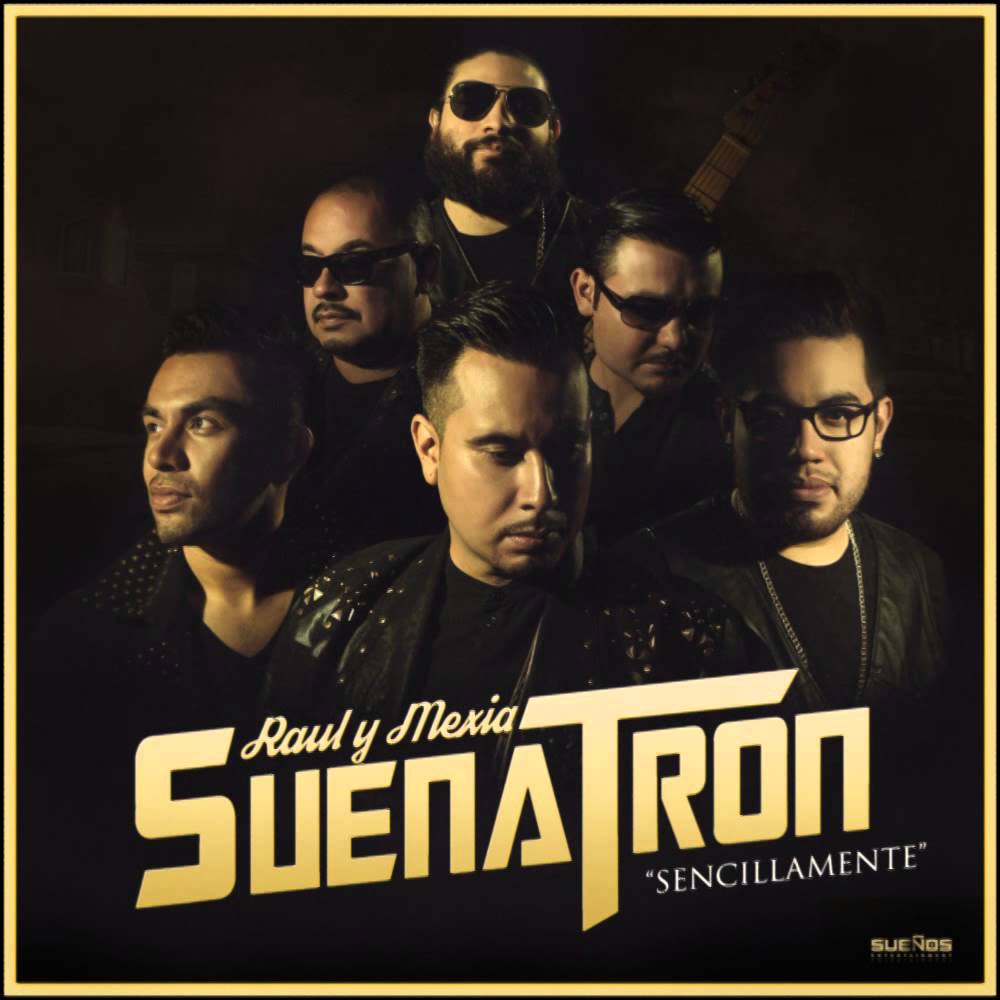
As when a forest fire clears the way for delicate saplings, we’ve got a bunch of new songs. The pick to click is “Malditas Ganas” by Alfredo Rios El Komander, in the midst of undergoing a “The Rock”-to-“Dwayne Johnson”-style name change. Los Tigres is in the top 10 with the second delightful single from their 2014 album. In what may be a fluke, Intocable’s charting with a loathsome power ballad off their 2013 album. The balladry’s more powerful with mariachi singer (and new La Voz Kids host) Pedro Fernandez, at #20 with the pretty “Si Tuviera Que Decirlo.” Finally, the brothers Raúl y Mexia Hernández present an entity called SuenaTron, which I’m pretty sure blasted Godzilla with a giant nuclear accordion in the last movie. Here they blast us with “Sencillamente,” pop-rock so straight up I’m not sure what it’s doing on this chart, aside from the accordion.

These are Mexico’s top 20 Popular songs as charted by RadioNotas. Don’t confuse “Popular” with the “General” list, which contains most of the same songs along with “Uptown Funk!”, Calvin Harris’s “Blame,” and Pedro Fernandez’s cohost Natalia Jimenez, among others.

1. “Contigo” – Calibre 50
2. “Eres Una Niña” – Gerardo Ortiz
3. “El Que Se Enamora Pierde” – Banda Carnaval
4. “Me Sobrabas Tu” – Banda Los Recoditos
5. “Dime” – Julión Álvarez y Su Norteño Banda
6. “Lo Hiciste Otra Vez” – Arrolladora
7. “Que Tal Si Eres Tu” – Los Tigres Del Norte
8. “Mayor De Edad” – La Original Banda el Limón
9. “Cuando Tu Me Besas” – El Bebeto
10. “Todo Tuyo” – Banda El Recodo

11. “Malditas Ganas” – Alfredo Rios El Komander
12. “Broche De Oro” – Banda La Trakalosa
13. “Debajo Del Sombrero” – Leandro Ríos ft. Pancho Uresti de Banda Tierra Sagrada
14. “A Lo Mejor” – Banda MS
15. “Culpable Fui (Culpable Soy)” – Intocable
16. “En La Sierra y La Ciudad La China” – La Adictiva Banda San Jose
17. “Sencillamente” – Raúl y Mexia + SuenaTron
18. “Nos Acostumbramos” – Los Horoscopos de Durango
19. “El Pajarito” – Marco Flores y La Número 1 Banda Jerez
20. “Si Tuviera Que Decirlo” – Pedro Fernandez

¡Nuevo! (starring Trakalosa and Alfredo Olivas)

trakalosa uresti

We’ll start with esta semana’s pick to click, and it’s a weeper. It turns out Edwin Luna, lead singer of La Trakalosa de Monterrey, is very convincing portraying un “Adicto a la Tristeza.” It helps that his voice chimes like a throaty bell. Luna’s labelmate and guest singer, Pancho Uresti from Banda Tierra Sagrada, is somewhat less convincing because his voice is scratchy. When the woman in the video spurns his advances, he’ll feel nothing and should be able to pick up pretty easily with someone else. I myself am addicted to the urgency of their chorus melody, and a quarter-million Youtube viewers in the past two days seem to agree.

Other newish singles include Hijos de Barrón’s “Mis Quimeras” (LNG/Hyphy), featuring cool bass work and a syncopated groove;

“Así Es el Juego,” an underwhelming cover of Colmillo Norteño‘s profane kiss-off (in a couple senses), by Luis y Julián Jr. ft. Naty Chávez. It’s available in both obscene and family-friendly versions!;

and I’m not sure if this counts, but Graciela Beltrán throws herself into a new ballad, “Qué Tal Se Siente,” and it’s good to hear her voice.

The big new album this week is Alfredo Olivas’s El Privilegio (Sahuaro/Sony), which originally seemed to have come out late last year but maybe it was leaked. Olivas is an alumnus of several labels, including Fonovisa and the aforementioned Hyphy, here making his Sony debut. He’s also written songs for big names, so maybe Sony sees in his boyish grin the next Gerardo Ortiz?

The quintet Los Ramones de Nuevo Leon’s Con La Rienda Suelta (Grupo RMS) exists, as does a new retrospective from hyphy floggers (and Hyphy alums) Los Amos de Nuevo Leon, 20 Éxitos (Mar).

And I’m confused about Hyphy alums Los Rodriguez de Sinaloa — didn’t they just put out an album? Well, there’s another one out there called Entre El Rancho y La Ciudad (Independent), which so far seems more energetic than Sr. Olivas’s album.

What’s that? — you’re worried Hyphy music is under represented? — very well, the trio Los Kompitaz released 12 Corridos y Canciones at the end of 2014.

Accordionist, singer, businessman, and crier of single tears Fidel Rueda releases Música del Pueblo on his own Rueda label. His latest single “No Te Vayas” has stuttering accordion and horn lines that sound like they’re fighting to squeeze through his tear ducts.

Feeling romantic and/or cash-starved, Fonovisa has released it’s annual Bandas Románticas de América comp, which last year sucked. As companion pieces, they’ve compiled 20 Kilates Románticos for a bunch of groups, including Recodo, Primavera, Bryndis, Bukis — you know, groups who have never been compiled before.

Los Angeles Azules’ Entrega de Amor

angeles-azules-con-logo

Los Angeles Azules/Los Angeles de Charly – Gran Encuentro (Disa)

Amid all the polkas and waltzes, regional Mexican radio loves to throw in cumbias, though sometimes you get the sense that’s more because they’re useful tools or building materials, the caulk of the format. They often pop up as behind-the-DJ music, and because cumbia beats tend to flow easily into one another, they’re consistent grist for those hour-long DJ mixes that make me change the station after a couple songs. But certain sounds you don’t shake very easily, and the sound of Los Angeles Azules — a 13-or-15-piece Mexico City cumbia/vallenato group that was big around the turn of the millennium — can’t be forgotten once you’ve heard it.

The sound’s all there on their first big hit from 1996, “Cómo Te Voy a Olvidar,” which took cumbia’s trademark guacharaca shuffle (“the rhythm… has been compared to a horse trot,” writes Ramiro Burr) and layered it with yearning pop melodies. Mysterious accordion riffs in the dorian mode (think “Eleanor Rigby,” the part that goes “picks up the rice in a church“) trade off with even more mysterious trombone riffs that invariably come to rest on some low “blaaaaaah.” In 1999 Azules scored Billboard’s Regional Mexican Track of the Year with “El Listón De Tu Pelo.” Excellent trombone blaaaaaahs in that one, and a female singer, Mayra Torres, trading vocals with Carlos Montalvo. (“An oddity,” wrote Leila Cobo about the co-ed singing in the April 28, 2001 Billboard.) Cumbia remains a proven route for female singers to get played on regional Mexican radio; last year the dear departed El Patrón 95.5 was playing Azules’ duet with alt-rocker Ximena Sariñana enough that the song landed inside their station top 20.

Azules weren’t the first or the only Mexican band to play this music, not by a long shot. In the Oct. 6 ’01 Billboard, Burr wrote:

Vallenato is indigenous to Colombia’s Atlantic coast. Throughout that country, vallenato — like that other Colombian rhythm, cumbia — continues to be as much a part of the cultural and social fabric as blues, jazz and rock’n’roll are in the U.S. However, cumbia and vallenato* are also Colombia’s most popular and best-selling musical forms. Although folk-based, the genre received an international boost when Colombian accordionist Aniceto Molina, on Joey Records, helped popularize it in Mexico during the 1970s with his former group, La Luz Roja de San Marcos.

The music gained popularity in Mexican urban centers in the early 1980s, when other artists, such as Los Angeles Azules and Celso Pina, began emulating Molina… Thanks to Carlos Vives’ 1993 landmark CD, Clasicos de la Provincia, the vallenato movement was thrust into the mainstream as Vives’ single “La Gota Fria” cracked the Billboard charts.

You can hear the guacharaca in “La Gota Fria,” but it’s faster and fleshed out by kick drum and other rhythms, along with some Andes flute.

The core of Azules, writes Burr, is the Mejía family — three brothers who kept their white collar jobs until at least 1999, well after they became a hit band and started touring extensively. Inevitably, somebody went solo. But it wasn’t one of the brothers. Billboard‘s Leila Cobo explains, again from 2001:

The foundation of Los Angeles de Charly is the high tenor of Charly Becies, a former singer with established romantic grupo Los Angeles Azules, a band whose greatest-hits compilation also topped the Latin sales chart this season. In 1999, Becies decided to branch out on his own, because, he says, “I was just one element in the group, and I wanted to have my own identity.”

That identity centered on romantic material, and the band initially tried to register a name that reflected that kind of music. When [producer Ignacio] Rodriguez found that all their top name choices were already taken, they settled on Los Angeles de Charly — a fortuitous choice, because the Hollywood movie of Charlie’s Angels was released at about the same time. “It was essentially free publicity,” Rodriguez says.

Pretty sure Loverboy got the same bump.

Last year Disa released a bunch of these Gran Encuentro retrospectives, variations on a CD format that’s super-popular in regional Mexican music. These compilations alternate songs by two different Mexican groups, related to one another by varying degrees of tenuousness. (I’m currently soldiering through Mazz/La Mafia and wondering both “why?” and “why the fuss?”) The two tribes of Los Angeles are, as we’ve seen, pretty close. But there’s definitely a difference in sound. Charly is the more conventionally poppy angel of the two, with major keys and soaring heartfelt vocals. The Azules sometimes go there, but they’re also content to skulk around in their dorian darkness while playing pretty love songs. And everywhere — everywhere — is the guacharaca. But that’s not all there is. Both bands know to dress up their rhythms with fx and gimmicks, like the deep voiced men singing “tututu TUM bobo” along with Farfisa organ in “Mi Cantar.” It’s the kind of thing that pops out on radio, and it sounds pretty good in this context too.

VALE LA PENA

*About those genre IDs: Burr seems to use “cumbia” and “vallenato” interchangeably while alluding to some never-explained difference. In the record guide linked above, he describes Azules’ repertoire as “horn-powered boleros and vallenato-styled cumbias.” What? In this fascinating interview, Colombian music scholar and cumbia DJ Mario Galeano Toro clarifies, “[V]allenato is a close cousin of cumbia. It’s mostly major keys. In the ’90s there used to be cheesy commercial vallenato that played on all the buses in Bogotá…” He goes on, “Cumbia is composed of many different rhythms; I would say around 30. They’re all part of one big family called cumbia, but each has its own groove. The guacharaca with that ch-ch-CH rhythm is really the thing you notice first when you hear cumbia.”

But, but, but! IS NOT THE MUSIC OF LOS ANGELES AZULES IN MINOR KEYS? Or at least DORIAN keys, which sound minor except with one note out of place? But does not Ramiro Burr call their music “vallenato”? This is all wading into treacherous territory, where people’s eyes start to glaze over at all the jargon. I remember having the same problem when I started getting Decibel magazine a decade ago, wondering how to differentiate dark from black from tech from grind from doom from death from whatever other kinds of metal were out there. (“Power” was pretty easy because of all the dragons.) Now I want to learn all the cumbia and vallenata rhythms, even as I’m pretty sure you can enjoy this music without going to that much trouble.

Create a free website or blog at WordPress.com.

Up ↑