The Grammys and the Mexican government would very much like Mexico’s musical output to consist of genteel roots music. Fortunately, NorteñoBlog’s annual playlist 2016 VALE LA PENA shows that Mexican-American musicians have other ideas.
Our playlist has El Komander singing about immigration in two very different, equally urgent songs: once from the vantage point of a mother whose son is missing, and once as a proudly binational drug dealer. The playlist includes a defiant statement of national pride from Los Inquietos and Marco Flores. There are love songs from guitar bands, brass bands, accordion bands, sax bands, and synth bands. El Bebeto and Banda Tierra Sagrada stop by to plug liquor; Fuerza de Tijuana celebrates two real-life American narcos. The guys in Los Titanes de Durango drive way too fast. La Rumorosa curses a terrible boyfriend; Intocable mourns absent amor with distorted guitar and a smoking accordion solo. At the top of the list, El Armenta offers a low-fi Lynchian nightmare of a cumbia about his girlfriend’s dog. All in all, it’s as energetic and varied as any single-genre playlist you’re likely to find.
THIS, Grammy voters, is where the action is.
———————————————–
 Even as NorteñoBlog congratulates living legend Vicente Fernández on winning his third Grammy for Best Regional Mexican Music Album (Including Tejano) (But Not Including Grupero ‘Cause That Shit Suuuuuuuux), we gotta note that this particular win is lame in a very Grammy-ish way. Continue reading “Lo Mejor de 2016: Where the Action Is”

 Resolve is not the Blog’s strong suit. Thus did I find myself washing dishes and listening to the latest in the series, Las Bandas Románticas de América 2017, 20 songs by 10 bands, only some of whom are “hitmakers” in the sense of “being heard anywhere outside this compilation.” I mean, I’m sure they tour. But if you’ve heard “Pedirás Perdón,” a 2015 nonentity by Banda Coraleña, on the radio anywhere in North America, you’re doing better than I am. If you can hum the song without looking it up, you’re doing better than Banda Coraleña. Give ’em this: their cover of Joey Montana‘s “Picky” is adequate! It’s also not included on Las Bandas Románticas de América 2017 — ironic for the least choosy compilation series around.
 But if you compare this week’s chart with the one from

 Welcome to the Mexican radio charts*: Changing quicker than Mexican-American diplomatic relations! More exciting than the Doomsday Clock! Not even half the existential threat of those

 This week in the “norteño legend covers the Great Ranchera Songbook” department, we find
  Leonardo Aguilar has lucked into some decidedly less accomplished banda charts on his debut album Gallo Fino (Machin) — if you wanna hear clarinets cloy hard, check out
 That includes the song at #20, “Culpable Tu,” by the young guitar/bass/tuba quintet Alta Consigna. Released back in July, it does not appear on their new album No Te Pide Mucho (Rancho Humilde), which shares a pacing strategy with Neil Young’s 1979 classic Rust Never Sleeps: lull listeners to sleep during the first half, then wake ’em up by rocking out more ferociously than any of your peers. This comparison is not exact; the first half of Rust Never Sleeps is better than the first half of No Te Pide Mucho, but in Alta Consigna’s defense, Neil Young famously did not record a world-historical bachata-with-tuba cover of
 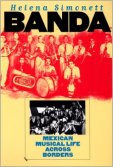 Current reading on the NorteñoBlog nightstand is Helena Simonett’s 2001 book Banda: Mexican Musical Life Across Borders. Simonett is an ethnomusicologist at Vanderbilt University; she spent much of the ’90s interviewing banda musicians and fans around L.A. and northwestern Mexico. If you think back to ’90s banda — at least
 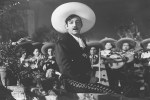 As told by Simonett, this history is complex, so here’s an oversimplification. For much of its early history, banda was largely confined to the state of Sinaloa in northwestern Mexico. (How it got there is a whole other story.) Mexico’s intellectual elite, centered in Mexico City, pushed mariachi as the national music of the people — it was cultivated by radio and the national government, which required mariachi bands play the capital in elegant charro costumes. Mariachi musicians still weren’t rich, but their string-based folk music was considered more noble and sophisticated than that of the bandas, even when the ensembles were playing many of the same songs. The difference? “Sinaloan intellectuals had never considered regional banda music folk music,” writes Simonett. “It was never the focus of interest, never presented as a tourist article, and never used for national political purposes… It evolved in the shadow of the periphery.”


 NorteñoBlog