 NorteñoBlog’s summer doldrums continue on the U.S. Hot Latin chart, where there’s only one regional Mexican song in the top 25 — [Casey Kasem voice:] at #23, here’s Gerardo Ortiz with the worst song from his new album! [/Casey Kasem voice] — and only 11 in the entire top 50. This is a historical anomaly. We’ve seen plenty of periods with more norteño and banda songs stuffed into the top 25: witness this chart from 2016, with 13 such singles, and who can forget the mid-’90s Tejano boom? Plenty of people can, but that’s not the point. The point is, why now?
Old dude’s hypothesis: it’s the internet’s fault. [Casey Kasem shakes fist at sky: “Millennials! You’re not reaching for the stars!”] The Hot Latin chart bakes in three different methods of song consumption, weighted according to a top secret algorithm. Regional Mexican music still gets plenty of airplay, leading to a fair number of hat acts among the diverse entries on the Latin Airplay chart. It’s the other two factors — digital sales and online streaming — where norteño and banda acts are struggling to keep pace.
 NorteñoBlog’s theory, unsupported by data because I don’t have it, is that the unprecedented popularity of “Despacito” is benefitting songs that sound like “Despacito,” and those songs’ streaming numbers are overwhelming the songs that don’t sound like “Despacito.” With three billion views, “Despacito” is now the most-watched video in YouTube history, and that’s just the version without Bieber. Videos and songs that follow it on streaming services are like sitcoms that followed Friends in the ’90s — automatic ratings contenders. CNCO, “Mi Gente,” “Felices Los 4” are all getting chart boosts because they’re dembow-ish bangers, often with international crossover appeal, that get recommended by YouTube or appear with “Despacito” on Spotify playlists. No matter how many norteño fans stream Calibre 50’s lite beer jingle “Las Ultras” or the latest Banda MS ballad, regional Mexican songs simply can’t keep up.
Prediction: This too shall pass. Eventually, the popularity of “Despacito” will fade. (Judging by the two-year chart run of “Propuesta Indecente,” that could take a while.) Once that happens, we’ll see more regional Mexican songs back on the big U.S. chart. If not, NorteñoBlog promises to have an existential crisis.
¡Jajaja! Just kidding. Not when there’s still cool shit happening on the Mexican radio. This week the Mexican radio chart sees two overlapping boomlets: three songs led by women (I know that doesn’t seem like much, but trust me, around here it’s refreshing) and three mariachi songs.
 Covering both bases are Alicia Villarreal, formerly of Grupo Límite and solo cumbia radness, and Ángela Aguilar singing a duet with her dad Pepe. Villarreal is singing an original high-drama number called “Haz Lo Que Quieras,” produced like much of her work by her husband, former Kumbia King Cruz Martínez.
 Bracing stuff; but since I tend to take my schmaltz stirred rather than shaken, I prefer the Aguilars’ “Tu Sangre En Mi Cuerpo,” a frankly cloying remake of… someone’s parent-kid duet that I will someday request at my daughter’s wedding reception. [Casey Kasem voice: “Their relationship quickly became strained.”] (Note: the song’s authors are Jose Luis Ortega Castro, Thelma Ines De La Caridad Castaneda Pino, and Yessica Sandoval Pineda; just not sure who did the original version.) Like Vicente Fernandez’s “Estos Celos,” this tune hits all my smooth mariachi buttons: soaring voices and strings milking high notes for maximum emotion while the chugging beat makes them sound like they’re tossing off everything — notes, burdens, hats, whatever. It’s the sound of a breeze blowing wispy clouds across a flat blue sky. Pepe’s career is long and distinguished, but Angela has been a real revelation this year, with a warm and inviting voice that reminds me of Gloria Estefan’s. Their last duet, the big smart cumbia “Nada de Nada”, earned the Blog’s affection, and this one carries on the legacy. Pick to Click!

 It was already
 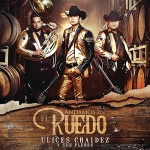 Also worth noting in the above-linked article: halfway through 2017, there’s only one regional Mexican album in the cumulative Latin top 10, and it comes not from perennial album seller Gerardo Ortiz, whose very good Comeré Callado Vol. 1 seems to be stiffing. Rather, this year’s biggest Mexican album is the (not quite as good) 2016 album from teen sierreño sensations Ulices Chaidez y Sus Plebes. Under Billboard‘s current album accounting methods, Chaidez’s “album sales” have risen thanks to online streams of his hit ballad “Te Regalo,” which peaked at #12 and charted for half a year.
 Ortiz could use his own big single to boost his Equivalent Album Units, but right now his lame sierreño pop “Para Que Lastimarme” is falling from a #15 peak. It’s looking more like Ortiz’s 2015 album Hoy Más Fuerte was, in fact, his
  One bright spot comes from Ortiz and his friends/labelmates Lenin Ramirez and Jesus Chairez: down at #26 on the airplay chart we find the three of them singing Chariez’s corrido “Recordando a Manuel.” It’s a spritely guitar-and-banda memorial to the late narco José Manuel Torres Félix, who was killed in 2012. Some sympathy for the devil, please — according to the song, he was a simple country man who only turned to a life of crime when mobsters killed his kids, at which point “el demonio” got him. Regardless of real-life circumstances, the song is stunning. I prefer Ortiz’s
 But fans of medical metaphors and in-song death need not worry: in its place we have “Doctor” by Bronco, a smooth, synth-led grupero throwback, written by one of the dudes from pop duo Río Roma. Its story is simple and disturbing. The self-medicating, anhedonic narrator visits his doctor asking for a heart transplant because he can no longer love. The doctor assures our narrator that no cure exists, and instead offers to kill him. The narrator accepts. This bleak indictment of Mexico’s public healthcare system has somehow slipped past censors and cracked the top 10 of the nation’s radio chart, no doubt thanks to the seductive powers of its soothing cumbia lilt. Seasons don’t fear the reaper. You can be like they are. Come on, baby.
 Just ahead of the sickos in Bronco we find La Séptima Banda and their latest shot of banda pop cheer,
 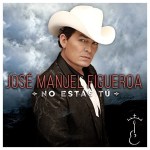 At #18 we find José Manuel Figueroa with
 Loyal readers understand that any new single by Alfredo Ríos “El Komander” makes NorteñoBlog crow with excitement. El Komander is one of the
  Far as I can tell, “El Gallero” hasn’t raised the hackles of the SPCA or any other group of moralizers. The same cannot be said for the song at #46 on the big chart, “El Pasito Perrón” by the gregarious dance band Grupo Dianastia Mendoza.
 First up! The oldest of the four comes from the venerable Banda El Recodo, doing Edgar Barrera and Martin Castro’s midtempo waltz
  Next oldest is from the man blessed with the continent’s best voice, Julión Álvarez, whose
  We turn to our next victims of love’s cruel dementia, La Arrolladora Banda, who know how to kick out the slow jams, some of which are really good.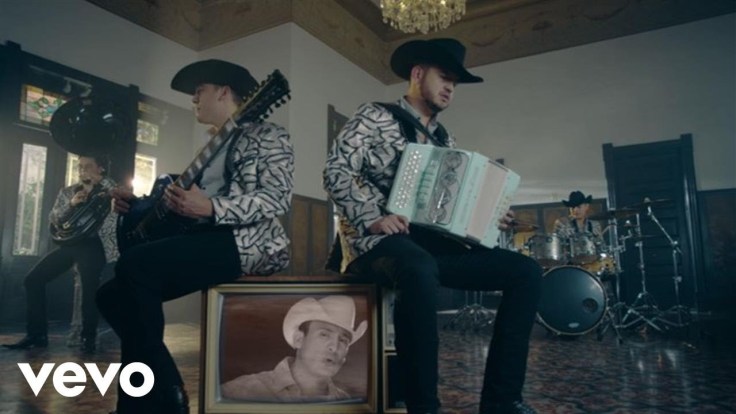

 Then at #18 we’ve got Diana Reyes with the banda song “La Pasión Tiene Memoria,” a song that appeared on her 2015 album but just got a video. It’s a Jekyll-and-Hyde deal with lovey verses detailing the memories of love, and then an angry chorus, in a different key and tempo, where Reyes goes crazy and feels everything overflowing inside her. The switch from verse to chorus is jarring, but Reyes’ voice remains a wonder and the song is growing on me. And it’s definitely better than anything off her dull new album Cuando Tuve Ganas. VALE LA PENA
 And it’s not just women getting in on the “women” act! At #17 we find Edwin Luna, his Banda la Trakalosa, and his perennially nascent acting chops performing “Un Aplauso,” which is sadly not a Lady Gaga remake.
 Including, it turns out, his 45. This hit corrido, #35 on the big chart and #20 on the radio, has inspired a round of Hasty Cartel Googling that hasn’t yielded much, except that El Fantasma’s narrator is somehow involved in the Sinaloa Cartel. He’s still firm with El Chapo’s sons Ivan and Alfredito, whose
 The song, you see, plays on the traditional


 NorteñoBlog
