Search

NorteñoBlog

music, charts, opinions

Month

January 2019

Who Invented “Regional Mexican”?

septima poster

Los Tigres play norteño, and so does Intocable —
Unless they play Tejano, un punto contestable.
The bandas all play banda; mariachis, mariachi.
Puro sax spews merry tears, norteño’s Pagliacci.
Cumbias are acoustic, when they’re not electric.
Singers may get richer, once they get eclectic.
Christian Nodal will tell you he plays “mariacheño,”
Y finalmente everyone starts playing sierreño.

Billboard‘s first Regional Mexican singles chart in 1994 contained a synth-heavy blend of technocumbias, technobandas, romantic grupero baladas, and one mariachi song. The chart was one of three new radio charts, along with Pop and Tropical/Salsa, that electronically surveyed Spanish-language stations across the U.S., a technology-driven update to the magazine’s never-ending effort to record which songs audiences heard most.

The “Regional Mexican” chart surveyed 70 stations whose playlists focused on — you guessed it — regional Mexican genres. That is, banda came from Mexico’s west coast, while Tejano began around the U.S./Mexico border region. Mariachi was an old, rural style specifically cultivated by Mexico’s intellectual elite to present a sophisticated and tourist-friendly cultural face. Grupera music was an abomination from the rank pits of hell, or maybe Acapulco.

kqqkThese disparate genres had a lot in common. Musically, the bands and their fans shared some core folk repertoire and an affection for polka and cumbia rhythms; socially, they shared the experience of being a largely working-class minority in a foreign land. But the genres were still pretty disparate. Of the 70 radio stations in that initial survey, 27 were in Texas, the home of Tejano music, and another 27 were in California, where L.A.’s KLAX had recently gotten huge playing banda music. My research is ongoing, but I’d be very surprised if, in 1994, KLAX’s playlist had more than a couple songs in common with Houston’s KQQK “Tejano 106.”

So “Regional Mexican” was a radio format that varied dramatically from city to city, based on the audience that lived within earshot. We’ll save for another day the question of how the format became standardized across the country. (If you can’t wait, Melanie Morgan breaks it down here.) Today’s question is, who invented the term?

As near as I’ve found (and it’s almost too obvious to be true), the answer is someone at Billboard — but if they knew they were coining a term, they didn’t trumpet the fact. Continue reading “Who Invented “Regional Mexican”?”

Joni Sandez on sierreño, “Las Mañanitas,” and “secrets nobody wants to say”

joni sandez

“The producer listening is probably gonna hate me — like, ‘No, don’t say that!'”

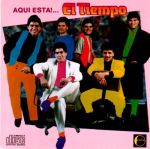
el tiempoJoni Sandez is joking, but he’s eager to talk about parts of the norteño recording process usually kept under wraps. He knows from experience. A lifelong resident of southern California, Jonathan Sandez, 26, grew up playing guitar and bass. At 14 he joined the long-running L.A.-based Grupo El Tiempo, playing bass and singing backup amid a synthesized sound rooted in the ’80s and early ’90s. “Modern Tejano, grupero, norteño music,” he explains. “They had accordion, but the accordion was actually in the keyboard.”

Going solo as a bandleader, Sandez has pursued a more acoustic direction. He plays concerts, festivals, and private parties with norteño groups, up to five shows a night. One New Years Eve he played for 12 hours and was still able to sing at the end. He’s justifiably proud of this.

Like many young musicians, his recent music has been mostly sierreño — two guitars and a bass. His latest single is straight out of the Great Ranchera Songbook: “Las Mañanitas,” a fond birthday wish sung by everyone from Vicente Fernandez to Javier Solís to Los Tigres. With his bassist’s ear, Sandez has added some smooth walking chromaticism to the bottom end, a sound you won’t find in most oom-pah-pah I-IV-V versions.

During our 45-minute phone conversation (edited for length), Sandez told the Blog about making the switch to sierreño, the differences between tuba- and bass-bottomed music, and some lesser known tricks of the trade — “those hidden little secrets that nobody wants to say.” Follow “jonisandez” on Instagram, Twitter, and YouTube, and check out his website.

NorteñoBlog: Why did you start recording sierreño music?
Joni Sandez: It went back to my roots. The style of guitar was what I used to do, which was requinto. You know, all those tremolo-sounding riffs and terceras — two notes at a time, three half steps apart — and sextas, six steps apart. It was what I was playing back then, and most of the shows that we go to, they wanna hear that 12-string guitar. When you hear sierreño, you’ll hear the terceras — you won’t hear just one note, [he sings, outlining a triad] “dun dun dun dun dun”, you’ll hear [outinling the same triad] “drun drun drun drun drun.” It’s really subtle, too. A lot of people of people who aren’t familiar with the music won’t know about that. That makes it sierreña, you know?

Is that you playing requinto on your recordings?
Yes. Once in a while I’ll have somebody come through. It’s more having a little bit of variety — everybody has their own style of playing, and if it’s always me on the tracks, it becomes a little bit too played out. All the bass is me, but on the requinto I’ll try to have somebody come in and put in a couple of fill-ins for the track.

How did you decide to record “Las Mañanitas”?
There weren’t really a lot of modern artists, in general, and not even one sierreño artist [has recorded it]. It’s such a classic. [My version is] very different, in terms of the rhythm — the rhythm is not the traditional sierreño, it’s a descending little pattern. I really like it a lot.

Why do you think sierreño has gotten so popular in the last three or four years?
In the scene, when you have an accordion player, usually the accordion player charges a lot of money to play with you. I think a lot of people started recording sierreño tracks because it’s a lot cheaper. It’s one of those things that probably nobody wants to talk about, one of those hidden little secrets that nobody wants to say. When you record a sierreño track it’s a lot quicker, a lot faster, because you already have a guitar there. If you wanna have a norteño, then you have drums, and you wanna have an accordion, and you wanna have a bajo quinto, which is a little more expensive than a natural guitar. In sierreño you need a bass and a 12-string guitar, that’s basically it. And a six-string guitar. If you want, you can even play sierreño with six strings, which is kind of how it all got started.

Do you prefer having a sierreño band with a bassist or with a tubist?
Continue reading “Joni Sandez on sierreño, “Las Mañanitas,” and “secrets nobody wants to say””

Desfile de Éxitos 1/19/19

t3r airport

Puerto Rican trapstar Bad Bunny has pulled a Drake this week, clogging up Billboard‘s Hot Latin chart with 10 tracks from his debut album X 100pre. (The highest charting is, whaddya know, a duet with Drake.) NorteñoBlog has long admired Sr. Bunny’s charisma and barber while having almost no use for his music. The greatest insult? He’s Despacitoing norteño music into near nonexistence on Hot Latin. Regional Mexican acts account for only nine of the top 50 songs, one less than Bunny himself. The Blog tells you all this to explain why our Desfile de Éxitos format has changed. You can only type “Bad Bunny” so many times before the Donnie Darko flashbacks become too intense to deal with.

What follows are three mini-lists. First up are the three regional Mexican songs that appear only on the Hot Latin chart, i.e. not on Billboard‘s Regional Mexican Songs radio chart. As you’d expect, since radio factors less into their success, these three songs all have enormous YouTube streaming numbers. As you might not expect, they’re all by sierreño bands. One possible conclusion: sierreño is for cool internet kids. The next list is the Regional Mexican radio top 10: mostly banda, a couple cumbias, and one apiece of sierreño and mariacheño. The third list — of one song this week — is music outside the radio Top 10 that also appears on Hot Latin.

ONLY ON HOT LATIN

fuerza regidaFuerza Regida“Radicamos En South Central” (#32 Hot Latin)
This sierreño gangsta nonsense is one high-living negocios signifier after another — I count appearances from Compas Tino and Chino, a bottle of Buchanan’s, and an X6 and a white Corvette, along with some good old-fashioned cocaine. The band is really good at switching from midtempo waltz to fast waltz on a dime, so that’s something. Now if they just learned to add backup vocals to their product placements, maybe they wouldn’t sound like they’re trapped in a cement bunker, playing under threat of torture. NO VALE LA PENA

t3r gerardoT3R Elemento ft. Gerardo Ortiz“Aerolinea Carrillo” (#33 Hot Latin)
The lead track from T3R’s 2018 album The Green Trip is ostensibly an ode to Pablo Escobar and his well-structured airborne narcotics business. It’s actually an ode to how cool it is to get high on a plane and sing about gangster shit. In the video, Kristopher Nava, the McLovin’ of the corridos verdes movimiento, chills in an airport lounge wearing a t-shirt that reads “Cookies” and refusing to enunciate. Sergio Cardenas, the band’s Cuban bassist, harmonizes beside him. Gerardo Ortiz plays a commercial airline pilot who smokes up in the cockpit and over-enunciates, well aware of the lurid cargo he’s transporting in his plane’s overhead compartments. Everyone nods a lot. Unlike Fuerza Regida, everyone here is in a good mood and knows the song they’re playing is patently dopey. VALE LA PENA y PICK TO CLICK

arrankeGrupo Arranke“A Través del Vaso” (#39 Hot Latin)
“Una Para Mi Chiquitita (y Una Más Para My Sad Cowboy Hat That Reeks of Authenticity, Even Though My Song Comes From the Horacio Palencia Song Factory)” (Sierreño Versión)
NO VALE LA PENA

TOP 10 REGIONAL MEXICAN SONGS

1. Christian Nodal“No Te Contaron Mal” (#11 Hot Latin)

2. Los Angeles Azules ft. Natalia LaFourcade“Nunca Es Suficiente” (#9 Hot Latin)

3. Regulo Caro“El Lujo de Tenerte” (#35 Hot Latin)

4. Banda El Recodo ft. David Bisbal“Gracias Por Tu Amor” (#44 Hot Latin)

sebastianes5. Banda Los Sebastianes“A Través del Vaso” (#14 Hot Latin)
“Una Para Mi Chiquitita (y Una Más Para the Underwear Models in the Video)” (Banda Versión)
VALE LA PENA

virlan garcia6. Virlán Garcia“Quiero Reintentarlo”
Virlán is horny as all get out, so it took an unusual triumph of will for him to keep this from becoming a slow jam. His sierreño band skips along, jaunty and desperate. Congas burble and the tuba line snaps at Virlán’s promises to kiss every corner of your body. VALE LA PENA

7. Banda MS“Mejor Me Alejo” (#25 Hot Latin)

8. Raymix“¿Dónde Estarás?”

9. El Fantasma“Dolor y Amor”

10. Banda Los Recoditos“Te Darán Ganas de Verme”

ALSO ON BOTH CHARTS

calibre14. Calibre 50“¿Por Qué Cambiaste De Opinión?” (#50 Hot Latin)
Exactly what you expect from a Calibre ballad: a death march of self-righteous indignation aimed at a fickle mujer, from the dudes who just humble-bragged about going “Mitad y Mitad” with two different women. With his fondness for six-syllable rhymes, Edén Muñoz delights in language more than most of his songwriting cohort, and “No vayas a llorar, que nadie te va abrazar” is a cold kiss-off — but their self pity is dull enough without the band deflating before your ears. NO VALE LA PENA

Selena and Ariel Camacho: coming to MoPOP 2019

selena memorial

Year after year, Seattle’s MoPOP Pop Conference is a great weekend to learn a ton of musical ideas you never imagined you’d need to know, and to meet and befriend a ton of very smart music geeks. This year the conference runs from April 11-14; the theme is death. See you there!

Here’s the abstract I’ll be expanding:

SELENA, ARIEL CAMACHO, AND TWO TRAGEDIES THAT RESHAPED REGIONAL MEXICAN MUSIC

selena cloudsIn 1995 the 23-year-old Tejano singer Selena Quintanilla died at the hand of her fan club president. She was already the biggest act in Tejano music, itself the hottest sound on the U.S. radio format known as Regional Mexican; but in death, Selena became a household name. Her posthumous bilingual album, Dreaming of You, debuted atop the Billboard 200 and became the best-selling Latin album of all time. A generation later Selena remains an icon, but the same cannot be said of Tejano music itself. “Tejano Market Hits a Lull,” read Billboard’s ominous 1997 headline, and in 1999 the Houston Press reported, “The Tejano scene is all but gone.” Over the ensuing decades the Regional Mexican format would turn to other sounds — most recently sierreño, an austere style that exploded in popularity after a different twenty-something singer, Ariel Camacho, died in a 2015 car accident.

ariel camacho cloudsAfter these styles’ respective stars died, why did keyboard-led, pop-friendly Tejano fade from the airwaves but sierreño — a drumless genre propelled by ornate tuba lines — became inescapable? To learn why, I’ll examine the aesthetic and commercial trajectories of both styles and the evolving Regional Mexican audience. I’ll also explore how the U.S. infrastructure for Mexican-American music has developed. Central to this story is the man who discovered Camacho, Ángel Del Villar, the owner of DEL Records and the person who realized modern sierreño could be viral youth music. Since Camacho died, Del Villar has kept the singer’s band going with two different replacement leaders; he’s also seen norteño stars like Gerardo Ortiz and Calibre 50 hop aboard the sierreño bandwagon. What insights do these styles’ respective death bumps give us into the machinations of the Regional Mexican industry and the identities of its U.S. audiences?

Relevant links:
Archivos de 1994 (Now With Submarine Tracking Technology)
A Guide to Regional Mexican Radio in Houston
“Go Tejano Day”: What’s In a Name?
Karma Comes Back to You Hard: The Tale of the Strangest Latin Hit in Years and the Dead Man Who Sang It
Odes to Music Executives and Other Criminals
¡Nuevo! (starring Los Plebes, Los Tucanes, y más)

¡Lo Mejor de 2018!

el-dusty

In 2018, Regional Mexican radio chilled out. Amid the ever-shifting blend of genres that comprises the format, the two “new” styles that commanded the most attention sounded remarkably blase about their surging popularity. In fact, “command” seems like the wrong word for the genres of cumbia and corridos verdes, since they were just sitting around in a smoky haze, waiting for audiences to trip over them.

As Elias Leight explained in a spring Rolling Stone feature, cumbias have been around for decades, having traveled from South America throughout the Spanish-speaking diaspora over the last 70-or-so years. Turn-of-the-millennium hits from Los Angeles Azules, a swanky Mexican big band, have never outgrown their use as commercial bumper music on U.S. radio. The band’s recent resurgence culminated in a 2018 Coachella performance, dug by none other than Justin Bieber, and a current hit rearrangement of Natalia LaFourcade’s tune “Nunca Es Suficiente.” And that’s just the acoustic stuff.

The electronic technocumbia scene, pioneered by Selena and her producer brother A.B. Quintanilla in the mid ‘90s, got new energy from former nano-satellite engineer Edmundo Gómez Moreno, aka Raymix, and his unkillable singles “Oye Mujer” and “¿Dónde Estarás?” The Blog admires the mysterious modality of these singles and admits they don’t really sound like anyone else.The Blog also never wants to listen to them. Like the band Low, for whose 2018 album Double Negative I also didn’t have much time, Raymix zeros in on precisely one mood and hits his mark. It’s a feat that demands acknowledgement rather than repeated listening.

If Raymix songs seem like they might sound better stoned, corridos verdes make that theme explicit. Praised by Snoop, played mostly by young sierreño bands who weave hypnotic patterns from acoustic guitars and either bass or tuba, these songs can get sort of samey. If you thought shoutouts to narcos were getting old, or if you were having trouble differentiating weeping meditations on drinking away lost amors, wait until you hear a bunch of young dudes sing about how high they are. These guys stick to themes. Their songs are sometimes hilarious, though, and the tubists and lead guitarists occasionally stumble across moments that’ll legitimately drop your jaw, regardless of how much THC is in your blood. As with so much else, it depends which strain you get.

Corridos about smoking weed aren’t new, either, but they do represent a shift, at least in terms of mainstream radio fare. A boyband like T3R Elemento might occasionally sing about real-life narcos and the marijuana production business, but unlike the older generation of corrideros — Gerardo Ortiz, El Komander, Noel Torres — they make no pretense that they’re singing from experience or proximity. Born and raised in the U.S., T3R Elemento sings about weed from a bilingual suburban U.S. high school point of view, a vantage their video iconography reinforces. It’s similar to what we saw with the Bay Area’s hyphy movimiento a decade ago. That movement also focused on drug and alcohol consumption, with little reference to Mexico or the drug production narratives that had long dominated corridos. Call these movements “assimilation” if you want, but they represent wilder, less predictable patterns of assimilation than political discourse or radio programmers have led us to expect.

Of course, Regional Mexican radio still plays frantic dressage polkas from Marco Flores, and plenty of maudlin slow jams from the likes of Banda MS. Old narcocorridos from Los Tigres rub shoulders with new ones from El Fantasma. Frantic emotions and spirited boasts will never die; but neither will the phenomenon of getting really baked, and then singing about it.

——————————————————————

Having accounted for trends, here are 11 Regional Mexican albums the Blog recommends, genre by genre — in several cases paired with their higher profile inferiors.
Continue reading “¡Lo Mejor de 2018!”

Blog at WordPress.com.

Up ↑