
Search

NorteñoBlog

music, charts, opinions

Author

joshlanghoff

Odes to Music Executives and Other Criminals

beto tiger

Ladies and gentlemen, our nation is in the grip of a Sierreño fever, and it´s mostly because — on the charts, at least — the dead are walking the earth. Or at least one dead man. For the second week in a row, Billboard‘s Hot Latin top 25 is 20 percent acoustic trio music, the signature Sierreño style of the late Ariel Camacho. His bandmates Los Plebes Del Rancho just released their first album since Sr. Camacho died, and they occupy four of those slots, one of them (the deathless “Hablemos”) with Camacho himself. The fifth trio spot belongs to Los Del Arroyo, backing up pretty boy gangster Adriel Favela. Had Camacho not died a year ago, it’s unlikely that he and his band would be clogging up the chart to this extent. The Arroyos might have still had their hit — after all, “Tomen Nota” is a really good song and Favela’s an established hitmaker — but it’s equally likely that Camacho’s post-mortem singles have whetted listeners’ appetites for rippling guitars and lurching basslines.

virlan garciaBut the old sound of Sierreño is having a moment off the charts, too. NorteñoBlog has already noted the fine new album from Los Migueles “La Voz Original,” who were Sierreño when Sierreño wasn’t cool. Now we’ve got a new tuba trio album from the young guitarist and singer Virlán García. His Y Cambió Mi Suerte (self-released) is a noble attempt to strike while the fever’s hot. (Please do not actually strike feverish people, except with leeches.) García is maybe the millionth person to record an ode to El Chapo Guzmán’s son “Iván Archivaldo,” but to his credit, the song demonstrates what a monster García’s lead guitarist is. This trio tries for different effects than the consistently hypnotic Los Plebes — “El Serio” contains some studied group fills, almost like a pop song arrangement, though the main riff just barely hangs together. In other words, they’re still a little rough, but they’ve got their sites set on bigger things.

pobre o criminalI’m pretty sure all of García’s efforts thus far — two self-released albums, an active Youtube channel — constitute a savvy bid for the attention of DEL Records. After all, DEL’s charismatic CEO Angel Del Villar is known for signing musicians (including Ariel Camacho) based on their Youtube presences. García no doubt reads Triunfo magazine interviews about industry hiring practices, so last year he wrote and recorded Del Villar his very own corrido, guilelessly titled “Angel Del Villar,” as part of the self-released album Pobre o Criminal. If you think this sounds familiar, you’re right. Los Plebes recorded a different ode to Del Villar, “DEL Negociante,” that’s currently sitting at #15 Hot Latin. Short story: “Angel Del Villar” is no “DEL Negociante,” but I’m sure the CEO noticed the effort, and that he appreciated it more than he would a giltter-bombed resumé. Continue reading “Odes to Music Executives and Other Criminals”

Who’s On the Mexican Radio? 3/8/16

pepe-aguilar

To hear Billboard‘s Leila Cobo tell it, singer-songwriter-producer Pepe Aguilar changed the industry of Regional Mexican music. Known for his giant sombreros and even bigger romantic mariachi ballads, this son of ranchera star Antonio Aguilar started his career as a rocker, he told Cobo in 2004:

Q: So what does a regional Mexican singer know about rock?

A: You should have met me when I had an earring and long hair! I recorded a rock album in 1987, before recording rancheras. Rock has been my inspiration and my best weapon. My Mexican music sounds the way it sounds because of rock. I produce and write everything I do musically based in rock.

Q: What happened with that album?

A: It flopped [laughs].

In 2012, Cobo credited Aguilar with essentially creating a new radio format. “Thanks directly to Aguilar’s contemporary readings on traditional music, radio stations that had never played mariachi opened up to the genre and, to this day, ‘romantic Mexican music’ is the programming base of dozens of stations around the country.” The closest Chicago comes to that format is Amor 106.7, where Pepe Aguilar is indeed a “core artist” but they also play bachata and Enrique. The point is, Aguilar’s traditional music has always had an element of crossover, and you can hear that in his latest banda single “María”, sitting at #9 this week on the Mexican chart.

“María” flaunts Aguilar’s crossover pedigree. With its pounding cumbia beat, its minor-key chord progression, and Aguilar’s seductive (and often multitracked) croak, it sounds like a stadium football banger filtered through a banda. It’s telling that Aguilar’s aside of choice is a grunted “hungggh!”, rather than the banda singer’s typical falsetto gritos. Add to that the high-concept video, where Aguilar stalks the nighttime city streets dressed all in black, eyes hidden behind intimidating sunglasses, using his magical touch to turn homeless women and whores into respectable ladies who dance around in bright primary colors. (One of them evangelizes some street toughs — this is the kind of retrograde video symbolism that inspires people to resurrect the term “street toughs” — who then paint a respectable wall mural. Of “María,” I guess.) Even in the most elaborate and sexist banda videos, singers rarely paint themselves as saviors. Whether lovers, cuckolds, protesters, or well-connected men about town, they belong to the scenes they depict. Aguilar here presents himself as savior and transformer, a transcendent figure — just as he sees himself within the regional Mexican scene?

Since the song sounds pretty good, we’ll let him think that if he wants. Pick to Click!

Continue reading “Who’s On the Mexican Radio? 3/8/16”

On Banda Music

banda serenade

Banda music is all about hard work; that work allows for banda’s fun, its depth, and its despair. Every banda song represents an enormous coordination of talent and effort, and this coordination is plain to anyone who listens. Aside from the lead vocal and an occasional horn solo or percussion fill, there is no pretense of spontaneity in banda music. The music we hear is the result of countless hours spent in preparation. Someone had to write charts for the horn players. To cleanly execute these charts’ complicated musical passages, the players had to devote time to rehearsal, both on their own and together. Popular musicians from metal to rap spend many hours practicing, of course, but the sheer size of a banda gives all this preparation, all this work, a quality of ornate formality. A banda song is like a room full of delicate antique furniture, where one misplaced elbow sends priceless valuables crashing to smithereens; or like an elaborate negotiation through a complex system of social etiquette, a labyrinth of rules that must be internalized if it is to be understood.

The rituals we see in videos — the horn players performing cheesy coordinated dances, the heartbroken singer bringing the banda to serenade his girlfriend outside her window — underscore what a lot of work a banda demands. In the movie Say Anything, Lloyd Dobler famously played a boombox outside Diane Court’s window to woo her. It was a charming gesture, in keeping with his character, and the wooing worked: the serenader won over his audience of one, and in doing so he won over the audience for his film. The serenading banda works in the same way. Just as the mujer at the window is impressed with the effort of her hombre — for starters, how the hell did he get 16 brass players together on the spur of the moment? — so we at the computer screen are impressed with the care and concentration the ensemble squanders on their silly pop song. When the three well-rehearsed virtuosos in Rush play a side-long progressive rock suite, they’re devoted nerds pleasing themselves; they could just as easily be arguing politics or playing Dungeons and Dragons. When the 16 virtuosos in a banda lavish their skill on their singer’s romantic plea, their audience must understand their effort as a formalized gesture of romance, or else all that effort and per diem money is wasted.

The canniest bandas recognize this elaborate formal system and use it to their advantage. Often their goal is romantic; Gerardo Ortiz can only soften his “Mujer de Piedra” if his banda’s music is harder and more rigid than her heart of stone. One of them must crack, and the banda never does. But just as often, the goal is humor — a humor that acknowledges The Void. In Recoditos’ “Ando Bien Pedo,”, the players’ dexterity mocks the drunken heartache of their singer as he marches toward oblivion. The audience, having learned to feel their way around the banda’s formality, recognizes this mockery for what it is and knows to laugh at the singer. Taken further, this effect explains an inescapable fixture of current banda albums: the big dumb cumbia. Nearly every banda album attempts one. Big dumb cumbias typically use only two or three chords, and their subject matter barely strays beyond drunken revelry or dance sensations that are (not usually) sweeping the nation. Yet the banda shows their big dumb cumbias the same, or more, consideration as any other song. Someone writes a horn chart full of elaborate musical passages. The players rehearse for hours to cleanly execute those passages. A banda rarely releases its big dumb cumbia as a single, so there the song sits in the middle of the album, awaiting its audience of several thousand: a hilarious and possibly scathing testimony to how much work musicians devote to their craft and how little, in the end, it all means.

¡Nuevo! (starring Los Plebes, Los Tucanes, y más)

cuisillos

Pura Rienda SueltaIt is the longstanding position of NorteñoBlog that the puro sax styles of Chihuahua and Zacatecas would improve with the addition of more terrible “sax” puns in the titles. The Zacatecan-I-think quintet Luis Ruiz y la Embarcacion de la Musica Norteña has just released their second album Pura Rienda Suelta (Goma) (alternate title: Cuidado Con La Bestia Saxy), and on first listen it stands out from the puro sax pack. Por ejemplo, accordion and sax hang out on a repetitive minor-chord riff in their single “Me Enamoré” (sequel title: “Tuvimos Saxo”). In a subgenre that’s almost oppressively chipper, minor chords count for plenty. But even on chipper tunes like Regulo Caro’s oft-covered “La Buchona” (alternate title: “Labios Saxys”), Ruiz’s clarion voice sells the songs. He’s got a way of making the most heartfelt pleas sound tossed-off. Thumbs up indeed, Sr. Ruiz.
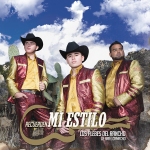
los plebesImprobably (and not at all saxily), Los Plebes Del Rancho de Ariel Camacho are climbing closer to the Hot Latin top 10 with their single “DEL Negociante,” written by their DEL Records labelmates Revolver Cannabis. Like “Me Enamoré,” “DEL” boasts a memorable minor-key riff. Unlike “Me Enamoré,” it features the teenaged José Manuel Lopez Castro pinch hitting for previous lead singer Ariel Camacho, who died a year ago, and he’s singing a song about their label boss, Angel Del Villar. This is both crass and wonderful. After Jimi Hendrix died, imagine his rhythm section renamed themselves “Experience Hendrix,” hired the fresh-faced Neil Young as a frontman, and scored a hit with “Lonely at the Top (Reprise),” written by Randy Newman in honor of Reprise Records boss Frank Sinatra. And then they recorded a whole album! While we’ll never know the results of that particular thought experiment, we can hear Recuerden Mi Estilo (DEL), which sounds pretty good. Lopez Castro lacks the immediate charisma of his predecessor, but tubist Omar Burgos has more than enough to share. Continue reading “¡Nuevo! (starring Los Plebes, Los Tucanes, y más)”

¡Nuevo! (Starring Kevin Ortiz, El Fantasma, y más)

el fantasma

EL FANTASMAOut of the dusty wilds of Instagram floats the apparition of a scratchy-voiced corridero and his Sierreño band, Equipo Armado. With a name like El Fantasma, you might expect to find little information on this guy, and you’d be right. El Fantasma is thoroughly frustrating NorteñoBlog’s Googling skills. But think of it this way: when a phantasmagorical Leonardo DiCaprio clawed his way back from bear death in Revenant: El Renacido, did his adversaries start Googling to find out who he was, or did they simply marvel at his acting chops and physical endurance? Before he killed them all, I mean. If I had seen that movie I would humbly submit that the frontier fur trappers did NOT use Google, they simply marveled and died, and so does NorteñoBlog marvel at the chops on display in El Fantasma’s debut album Equipo Armado (AfinArte). Like Los Plebes del Rancho, still going strong a year after Ariel Camacho’s death, Armado features flashy lead requinto effects set against rhythm guitar and a tubist who can’t decide whether he’s playing lead or bass, so he plays both at once. A banda (Banda Los Populares Del Llano?) joins El Fantasma for the final five tunes, and the album sounds better if you accidentally listen to it on shuffle, because then the Sierreño gets all mixed up with the banda. Check out lead single “Mi 45,” in which Fantasma: El Renacido actually shows us his 45. But don’t let your kids watch it.
VALE LA PENA

La-Original-Banda-El-Limon-Con-Julio-Preciado-Mas-Original-Que-Nunca-Disco-2015Almost a year ago, noted national anthem mangler Julio Preciado released a single with La Original Banda El Limón. La Original, you’ll remember, is cladistically related to unstoppable hitmakers La Arrolladora Banda El Limón, having sprung from the common ancestor Banda el Limón sometime in the late Pleistocene. Continue reading “¡Nuevo! (Starring Kevin Ortiz, El Fantasma, y más)”

How Do We Hear Violent Corridos? (Desfile de Éxitos 3/12/16)

los tucanes

Thanks to Los Tucanes de Tijana, NorteñoBlog has been forced into another installment of our occasional feature HASTY CARTEL GOOGLING. This long-running quintet of corrideros is nothing if not consistent, and they’re back at #20 on the Regional Mexican airplay chart with “Panchito El F1,” a pro forma cartel ballad ripped from the headlines by their prolific songwriter Mario Quintero. The story concerns a real life honcho of the Gulf Cartel in Zacatecas. Until recently he operated under the nombres de cartel “Panchito” and “F1,” but was captured along with coworkers in May. The federales also confiscated some of the cartel’s heavy weaponry, including four grenade launchers and four AK47s. (No andan cazando venados con esa mierda, amirite?) The song is Panchito’s origin story: when ordered to kill someone else’s family, he refuses. As a penalty, his own family is kidnapped and tortured, but he gets them back. (I think; standard gabacho translation caveats apply.) The corrido also mentions a different Gulf Cartel honcho named Comandante Hamburguesa. Since this Hamburgler appears to be still at large, NorteñoBlog will leave his Hasty Cartel Googling up to you!

Does current Mexican law permit narcocorridos on the radio? This recent article suggests “Panchito El F1” is probably banned from Mexico’s airwaves because it “publicly supports criminal actions.” (I’m sure the Gulf Cartel is wondering why membership is down.) As we saw in our last round of Hasty Cartel Googling, this ban is not absolute: La Séptima Banda recently charted with the wafer-thin character study “El Hijo del Ingeniero,” based on the party habits of a real life cartel scion. But that’s a party song. “F1” has violence and weaponry and is not the sort of thing the Mexican government wants impressionable muchachos to hear. You know, all those muchachos who listen to the radio but don’t know how to work Youtube.

NorteñoBlog does not support banning violent corridos from the radio, because banning violent corridos from the radio is silly. Corrido bans are the ineffective smokescreens of an utterly failed war on drugs. Better to focus on the corruption that prevents Mexico from thoroughly prosecuting its criminals. Better to alleviate Mexico’s poverty, or to deal with drug-addicted El Norte; these are the blights that have driven Mexican people to the cartels. (A possibly optimistic statistic: “A 2012 study by the Mexcian Institute of Competitiveness (IMCO) figured if the U.S. legalized marijuana, Mexican drug cartels would lose 30 percent of their revenue.”) There are no simple solutions; but whatever the solutions might be, neoliberal outrage over suppressing free speech is a secondary issue.

So here’s the real question when it comes to songs like “F1”: What do people hear in violent corridos, and why? Continue reading “How Do We Hear Violent Corridos? (Desfile de Éxitos 3/12/16)”

Who’s On the Mexican Radio? 2/16/16

lafourcade

First off, NorteñoBlog congratulates friends of the blog Los Tigres, Natalia Lafourcade, and most charming man alive Pitbull on their recent Grammy wins. Los Tigres’ very good Realidades won for “Best Regional Mexican Music Album (Including Tejano),” a category that included no Tejano albums but whose name testifies to the lingering power of the Tejano voting bloc. Or at least to the outspoken crankiness of the Tejano voting bloc. (I assume there’s still a Tejano voting bloc.) Lafourcade’s fine Hasta La Raíz tied with Pitty Wap’s intermittently banging Dale for “Best Latin Rock, Urban, or Alternative Album.” NorteñoBlog woulda picked Maquinaria Norteña for Regional and Bomba Estéreo for Rock/Urban/Alternative — after all, the Bombas excel in all three areas — but these were still respectable and relevant choices.

Next, NorteñoBlog congratulates Espinoza Paz for writing lots of decent, non-sappy songs recently. Paz is capable of biting hilarity — see Marco Flores’s “El Pajarito” and Los Horóscopos’ “Estoy Con Otro En La Cama.” He can also concoct musical experiments that look deceptively simple, like Arrolladora’s “Cabecita Dura” — 120 straight syllables without pause or apparent breath! — and straight up banda bangers like Roberto Tapia’s new single “Vale La Pena.” (That video seems to have fallen off a truck, so watch it while you can.) Back in 2009, after he’d won his second straight BMI songwriter of the year award, Billboard‘s Leila Cobo interviewed Paz, a former migrant worker who doesn’t read music.

Cobo: How would you describe your music?

Paz: Commercial.

True enough; and like most professionals he’s had some bad days at the office, especially in solo work like “Sin Esencia,” a pensive smell-the-fart guitar ballad. Continue reading “Who’s On the Mexican Radio? 2/16/16”

Indie a Go Go Again! (¡Nuevo!)

alex saucedo

el armentaStricken with a rare case of getting to the point, NorteñoBlog directs you cuanto antes to the latest single by El Armenta, aka singer/songwriter/businessman/director Raymundo Armenta from the state of Guerrero. The zero-budget video for “El Perro Se Soltó” (Armenta), presented by Raysunshine Films, does not quite achieve the demented heights of Ed Wood’s Cocaine-Fueled Fever Dream, but it comes close. It cuts repeatedly between two different scenes. In the normcore narrative half, El Armenta stops by the home of his novia, who’s been preparing for his visit by doing the dishes, putting on makeup, and ignoring calls from an unknown number. Armenta brings her a stuffed perro and unsuccessfully tries to throw grapes into her mouth. He abruptly disappears from this narrative, sending novia to the recliner for a nap. She wakes to the sound of a barking perro on the radio, checks her phone, and leaves. This plot summary should be taken as a NorteñoBlog cry for help.

In the second scene, El Armenta dances in a park amid a circle of people wearing sombreros and grotesque rubber masks. They hold sticks the size of baseball bats tied to coils of rope. Although they are frankly frightening, nobody gets hit with a stick. I’m not sure how these scenes relate to one another or to el perro de la novia del Armento; no doubt I’m missing a proud cultural tradition and/or a lyrical plot point. So be a dear and watch this thing, will you? To sweeten the deal, I’ll tell you that of all the big dumb banda cumbias I’ve heard this year, “El Perro” is the best, with horns and clarinets blaring all over the place and a churning beat that doesn’t quit until the dog barks at the end. The sound’s a little clipped in the video, which only adds to the Lynchian daytime nightmare feel of the whole endeavor. An obvious Pick to Click. Continue reading “Indie a Go Go Again! (¡Nuevo!)”

The John Mayers We’ve Been Looking For (Desfile de Éxitos 2/20/16)

roberto tapia

Tomen nota: Regional Mexican’s hot streak in the top 25 wanes this week, with Recodo, Séptima, Chuy Lizarraga, and Ariel Camacho‘s “Te Metiste” dropping off the Hot Latin chart. Banda and norteño acts hold down less than half the chart with 11 of the top 25 spots. The nuevo-Sierreño strums of Los Plebes del Rancho occupy two of those with a couple unlikely hits: a love song from 2014 and a new corrido about the head of their record label. If you’re keeping track at home, this extends Ariel Camacho’s death bump to almost a year.

But Los Plebes aren’t the only guitar heroes to chart this week. “Tomen Nota,” the duet between honey-voiced Adriel Favela and photogenic Sierreño badasses Los Del Arroyo, is threatening to take both acts into new territory: the Hot Latin top 20. This is partly thanks to the eye-catching video, in which our watch-enthusiast anti-heroes use their pistols to turn an everyday game of billiards into BUMPER POOL. On the other hand, said video came out last May, which gave it plenty of time to stream its way onto Hot Latin. I’m guessing the previous Pick to Click is hitting now because its increased radio presence, currently #9 on the Regional Mexican airplay chart, is in turn driving even more streams. ¡Sinergia! Continue reading “The John Mayers We’ve Been Looking For (Desfile de Éxitos 2/20/16)”

Blog at WordPress.com.

Up ↑