
A couple weeks ago, Banda El Recodo brought their act to the Twin Cities. In response, I brought my “turn Helena Simonett and a bunch of old Billboard articles into a listicle” act to the Minneapolis City Pages: 10 times Banda El Recodo, Mexico’s longest-running brass band, did something first(-ish).
The list runs down their history of firstness, from wearing uniforms in the ’40s to breaking sonwriter Luciano Luna in 2007. Along the way, they recorded swing, country, and… a version of the Lambada?
In 1989, they hired a singer to front the band.
By putting Conrado Calderón on payroll, Don Cruz made his job easier. Now the band could play their one-off vocal singles in concert without scrambling to find someone to sing them. But Cruz was also reading la borra del café: If the banda was going to reliably score hits, it needed a frontman. Calderón’s throaty voice was smooth as agave, making him perfect for this recording of “Llorando Se Fue/Lambada,” released when the Forbidden Dance was sweeping our sorry continent.
They were right to forbid it.
Meanwhile, over at Living Lutheran, I wrote about the documentary Los Tigres del Norte Live at Folsom Prison as a pretext to explain norteño music to the country’s whitest Christian denomination. Find the doc on Netflix, and then read Justino Aguila’s making-of account — playing at Folsom sounds like a logistical nightmare. From the review, enhedded The unlikely ministry of Los Tigres del Norte:
Though norteño bands play love songs and dance songs, they’re best known for corridos, story songs of regular people triumphing over the powers that be—or not. Los Tigres’ 1972 breakthrough hit, “Contrabando y Traición,” is a Bonnie-and-Clyde tale of two drug dealers that ends in tragedy. The band have kept singing complex stories of migrants: travelers from Central America, settlers whose children assimilate and grow distant, and countless others. Relying on hired songwriters, they’ve accumulated a catalog of immigrant narratives unparalleled in its thoroughness and subtlety.
One of those songs, “La Jaula de Oro,” found its way onto the Spotify playlist Strangers in a Strange Land: A Migration Soundtrack for 2019. It’s an hour of migration-related music that includes jazz, country, hardcore, new age, New Zealand Christian rap, a Tony winner, and the biggest single of the year, followed by a 40-minute chaser of John Luther Adams orchestral music. There’s a beginning, a middle, and an end.
I’m pretty sure you won’t like everything on it, but I’m even more confident you’ll find something on it you really like.




 That includes the song at #20, “Culpable Tu,” by the young guitar/bass/tuba quintet Alta Consigna. Released back in July, it does not appear on their new album No Te Pide Mucho (Rancho Humilde), which shares a pacing strategy with Neil Young’s 1979 classic Rust Never Sleeps: lull listeners to sleep during the first half, then wake ’em up by rocking out more ferociously than any of your peers. This comparison is not exact; the first half of Rust Never Sleeps is better than the first half of No Te Pide Mucho, but in Alta Consigna’s defense, Neil Young famously did not record a world-historical bachata-with-tuba cover of
 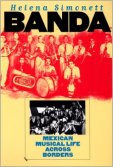 Current reading on the NorteñoBlog nightstand is Helena Simonett’s 2001 book Banda: Mexican Musical Life Across Borders. Simonett is an ethnomusicologist at Vanderbilt University; she spent much of the ’90s interviewing banda musicians and fans around L.A. and northwestern Mexico. If you think back to ’90s banda — at least
 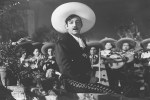 As told by Simonett, this history is complex, so here’s an oversimplification. For much of its early history, banda was largely confined to the state of Sinaloa in northwestern Mexico. (How it got there is a whole other story.) Mexico’s intellectual elite, centered in Mexico City, pushed mariachi as the national music of the people — it was cultivated by radio and the national government, which required mariachi bands play the capital in elegant charro costumes. Mariachi musicians still weren’t rich, but their string-based folk music was considered more noble and sophisticated than that of the bandas, even when the ensembles were playing many of the same songs. The difference? “Sinaloan intellectuals had never considered regional banda music folk music,” writes Simonett. “It was never the focus of interest, never presented as a tourist article, and never used for national political purposes… It evolved in the shadow of the periphery.”






 NorteñoBlog