¡Ya era hora! Banda El Recodo, los papás corteses de Sinaloa, suenan más emocionados en su nuevo sencillo “Mi Vicio Más Grande.” A The Singles Jukebox, Rebecca A. Gowns escuchó “the ‘My Way’ of 21st Century banda.” Yo escribí:
The Sinaloan institution Banda El Recodo is closing in on 80 years old, and they haven’t stayed at the forefront of their genre all those years by happy accident. Bandleader Alfonso Lizárraga has tailored Recodo’s recent singles with sartorial precision, filling gaps in the regional Mexican playlist. In 2009 he adapted “Dime Que Me Quieres” from a ballad into a cumbia because there were no romantic cumbias on the radio. Four years later Recodo went the opposite direction, plugging “Vas a Llorar Por Mi” into the spot earmarked for “melodramatic stop-start ballads about death.” (You didn’t know you wanted that, did you? RECODO DID.) Now the team returns with their liveliest song in years, a furious minor-key chops killer about living the good life. The theme is nothing new, but the furious minor-keyness picks up where spinoff band Recoditos left off two years ago with “Mi Último Deseo.” Recodo races through that two-minute slot with thicker brass and, in Geovanni Mondragón, a less personable singer, though I do admire his trembling vibrato in the chorus, seconds before his bandmates wallop him with a giant hemiola.
[7]
A crowded field of contenders met this week, selling themselves to a fickle public by trying to outshout their rivals. As they took their places on the public stage, arranged according to their polling numbers, some sported relatively fresh faces while others had clearly been here before. Broadcast to the masses, they broached the familiar topics of family values and the plight of the working class. They touted their hardscrabble origins and titanic work ethics. One challenger had amassed unimaginable wealth and made certain everyone in the audience knew it. The contenders spared no expense, and certainly no words, in their attempt to move one step closer to claiming the world’s most powerful and coveted title.
I refer, of course, to NorteñoBlog’s prestigious Pick to Click.
There are eight new songs, to be exact, since the last time we checked the Mexican radio charts five weeks ago. I’m afraid I can’t assign their singers one-to-one correspondence with the… unique field of candidates seeking the Republican nomination for U.S. president. Although both groups contain mostly men — in this thought experiment, the part of Carly Fiorina will be played by Los Horóscopos — the Mexican radio stars are not, so far as I can tell, frightening power-mad scaredy cats. Here are their strong suits, from lowest polling to highest:
At #20, Diego Herrera sings a tribute to the families who’ve stood behind their famous norteño singing sons. This could have lapsed into sap, but Herrera is a masterful singer who lands each of his many words with precision and dexterity. Plus he uses the word “chingones” over and over. (Since I don’t think Miss Manners has covered it, this Latina article dissects how appropriate the word is for polite company. Opinions vary!)
At #19, the man with the continent’s best voice, Julión Álvarez, sings about love (as he does) in one of his better recent tunes, a fast banda. He’s also the only person I know who has convincingly sung the word “irremediablemente.”
Los Tucanes and their rich friends Código FN are at #18, singing a corrido about the big name bandas who play their fancy parties, where the liquor bottles flow like spit valves and muchachas dangle from arms. How did our hosts get all their money? Don’t ask questions!
At #17, the members of La Estructura, a relatively new quartet/quintet, are weary. Their gauntlet of negotiating the nightlife and trying to win back a pretty mujer has tuckered them out. As the tubist blarts out sad counterpoint the lead singer stops traffic to block his ex’s SUV and plead his case. Improbably, this works.
Mariachi Pedro Fernández is at lucky #13 with a cover of Leandro Rios’s excellent rhyming exercise/claim to hardcore ranchero roots, “Debajo Del Sombrero.” The song remains great, but Fernández’s take sounds too smooth, even perfunctory, as though he and his well tooled mariachi machine are racing through it.
Up at #9, Fidel Rueda insists, over speedy banda, that he is not el mandadero, for whom he is sometimes confused by assholes. Rather, la moneda está volteada, y Rueda es él que manda. Merely for serving as a furious rebuke to some of those frightening power-mad scaredy cats, this would be a front-runner for Pick to Click status. Turns out it’s a fine song, too. I’ll entertain a motion from the floor.
I mean, you knew it wasn’t gonna go to those Sebastianes or Arrolladora ballads, they just kept crying all over the place.
(BTW, the top 3 songs remain unchanged from five weeks ago. Meet the new jefes, same as the old jefes.)
These are the Top 20 “Popular” songs in Mexico, as measured by monitorLATINO. Don’t confuse “Popular” with the “General” list, which contains many of the same songs but also “Worth It,” “See You Again,” “Cheerleader,” and a Kalimba song that strums along forgettably.
It is the longstanding position of NorteñoBlog that the puro sax styles of Chihuahua and Zacatecas would improve with the addition of more terrible “sax” puns in the titles. This week’s roundup is all Chihuahua (“Saxo Con Mi Chihuahua”? nononono), but stay tuned, as Zacatecas continues to prolifically birth more sax bands than any of us can handle.
Los Bravos de Ojinaga have just released their 10th album, A Más No Poder (Azteca) (alternate title: Saxo Toda La Noche), and it’s everything you like about the puro Chihuahua sax: accordion and sax lines intertwining around the singer, spritely dance grooves, and yearning harmonies. It’s also everything you dislike: namely, it gets kind of samey after a while and it never peaks. This is music for house parties and cleaning up after them. (Saxy norteño albums really make me step up my sweeping and mopping game.) The video for Los Bravos’ romantic single “Comprendelo” features a cuckolded cowboy and Jesus on an accordion.
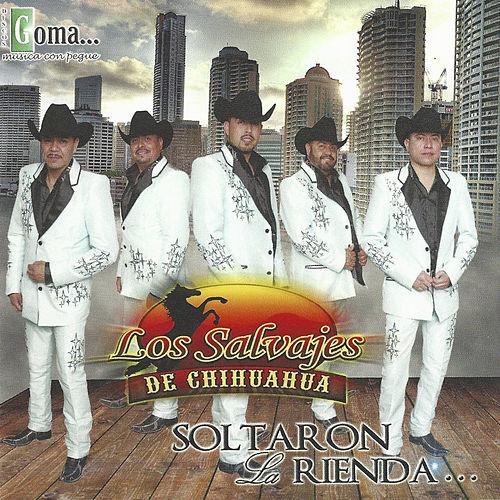
Speaking of el saxo y la salvación (there’s your album title!), Los Salvajes de Chihuahua recently released album number 11, Soltaron la Rienda (Goma). In an unusual case of puro Chihuahua sax distinctions being cost-effective, “Algo de Ti” is a better lead single than “Comprendelo” because it throws in some additional beats and minor chords where you don’t expect them. A cursory listen to Soltaron makes me think Los Salvajes pay more attention to their pop hooks than Los Bravos do, and Edgar Estrada sings with an appealing rasp. Pick to Click!
I feel like we’re giving short shrift to the rival puro sax style of Zacatecas. I know this comes as a huge disappointment. Whatever. The puro Houston fishermen Los Pescadores del Rio Conchos have a new single out, “Fui Un Mal Amor” (Azteca), in which they harmonize and lament. El Rio Concho, as you know, is a Rio Grande tributary that flows through Chihuahua and contains 12 endemic species of fish. It’s also the title of a Richard Boone Western film from 1964. If I knew more about movies, I might be able to tell you how sussing out the distinctions in puro sax songs is like doing the same with Westerns, where type scenes manage viewer expectations and little moments can make all the difference. Forthcoming thinkpiece/album title: Mal Saxo Es Mejor Que No Saxo.
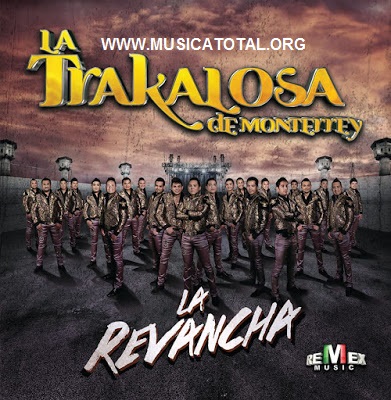
Even by the melodramatic standards of banda singers, Edwin Luna stands out. Like Guy Fieri in the genre of “annoying Food Network personalities,” Luna adds to the baseline expectations of his job description an idiosyncratic arsenal of tics, his husky quaver swooping and shouting where other singers would be content to just, you know, hold the note. Like Fieri, this makes Luna interesting to listen to — you never know what invitation to parody will emerge from his throat next — even when the surrounding material is lacking, as it is on La Revancha (Remex), the latest album from Luna’s band La Trakalosa de Monterrey. Unlike Fieri, Luna has the self-awareness to turn these tics into artistic achievement. Trakalosa’s 6-month-old “Adicto a La Tristeza” remains a jam because it’s about Luna’s over-emoting. It’s the sonic equivalent of a cinematic closeup on a single tequila-filled tear.
The eight-minute video for La Revancha‘s title single collects a vial of those tears, shakes ’em up with lime juice and salt, and then pours the whole mess back into your eyes. (SPOILER ALERT!) In the most momentous period of anyone’s life, ever, Luna loses his job the day he learns his wife is pregnant. Months later, with his wife approaching labor while he still can’t find any, Luna bumps into a friend on the street. We can tell this friend is no good because he’s wearing reflective aviator shades. Friend brings Luna to meet his face-tattooed, gun-toting jefe; with a heavy heart, Luna scribbles down his contact info and goes home. There is a mixup with some of jefe’s cocaine-sniffing cabrones. They read Luna’s info, go to his house and kill his family. For some reason Luna goes to jail, where his fellow inmates throw stuff at him in the cafeteria and presumably give him wedgies. This teaches Luna to toughen up, which is good because we get to see him without a shirt, and also because jefe and cabrones eventually show up AT THE SAME JAIL. By now, Luna is a well-established man about prison and can barter for a pistol, which he keeps on a shelf in his cell, out in the open, next to a photo of his dead wife and a little statue of La Virgen. What will happen in the next episode? Will a guard passing by Luna’s cell, you know, see the pistol and confiscate it? OR WILL LUNA HAVE SU REVANCHA? Stay tuned!
The rest of the album is OK. Despite the energy of Remex bands’ singles, their albums tend to be heavy on ballads. La Revancha is no exception, although, like most other Remex albums, it runs mercifully short. Highlights include “Camuflaje,” a piano-led duet with mariachi Fato, and the stacked harmonies of “Ya Verás.”
Receiving an epic death bump on last week’s Hot Latin chart was singer-songwriter-guitarist-producer-equestrian Joan Sebastian, who recently succumbed to cancer at age 64:
On Hot Latin Songs, 11 of Sebastian’s tracks enter[ed] the chart — the most concurrent titles an act has ever had on the list. And, all of them are in the top half of the tally, including four in the top 10. One of his most memorable hits, “Un Idiota,” re-enters at No. 2 powered by 1.9 million weekly streams and 2,000 digital downloads sold in the week ending July 16 (up 2,306 percent according to Nielsen Music). “Un Idiota” originally peaked at No. 22 in 2001.
Note that none of these songs showed up on the Regional Mexican Songs airplay chart; Sebastian’s songs likely received more airplay than usual, but that bump didn’t coalesce around any one song. “Un Idiota” would have been a good candidate: two verses and choruses of gentle acoustic remorse, including spoken passages and a big “te AAAAAmo” chorus, it captures Sebastian’s knack for sounding traditional and poppy at once. (Alacranes Musical’s version displays a similar knack, although, as with every duranguense song, it requires that listeners shed any preconceptions about the emotional capacity of peppy synth polkas.) Listening to the smattering of Sebastian’s re-charting songs, it’s hard not to be impressed by the breadth of his catalog — the man could create pop ballads, uptempo synthpop, pedal steel country, mariachi, and Tejano with equal authority. His songs have begun drifting off the Hot Latin chart this week, so click on a few before they’re gone.
When we last encountered Duelo’s not-at-all-sexist tale of a heartless, icy, poisonous, murdering, dream-killing mujer, I wished it sounded more venomous. I have since shed my preconceptions about form following function and direct you to “Veneno,” this week’s Pick To Click and an excellent Tejano midtempo with a killer opening riff. (I can’t be the only one who hears Def Leppard’s “Hysteria.”) Singer Oscar Ivan Trevino regrets the venom flowing through his veins but sounds resolved to suck it out. Don’t try that at home.
Other nubes include a fine Tejano ballad from Conjunto Primavera ft. Intocable’s Ricky Munoz, although singing in the vicinity of Primavera’s Tony Melendez remains a fool’s errand; a fine Tejano midtempo from Intocable themselves; and Trakalosa’s “La Revancha,” whose melodramatic eight-minute video has things to say about Fate and Class and What Makes A Man Start Fires, or at least Beef Up And Kill Other Dudes. Driven by airplay and a new video with lots of slow-motion horses, Ariel Camacho’s elegiac “Te Metiste” climbs to #2 Hot Latin. Could he score his second posthumous #1?
In sadder news, Calibre 50’s latest boring ballad, already a big hit in Mexico, enters both charts. If history is any guide we’ll be changing the station on it for a while.
These are the top 25 Hot Latin Songs and top 20 Regional Mexican Songs, courtesy Billboard, as published August 8.
21. “El Taxi” – Pitbull ft. Sensato & Osmani Garcia
22. “Me Voy Enamorando (Remix)” – Chino & Nacho ft. Farruko
23. “Solita” – Prince Royce
24. “Aunque Ahora Estes Con El” – Calibre 50 (#9 RegMex)
25. “Duele El Amor” – Tony Dize
¡Adios! “Hablame de Ti” – Banda MS (#5 RegMex) (snoooooozzzzzz) “Nota de Amor” – Wisin + Carlos Vives ft. Daddy Yankee “Contigo” – Calibre 50 (#9 RegMex) “Mi Verdad” – Maná ft. Shakira “Back It Up” – Prince Royce ft. Jennifer Lopez & Pitbull “Como Antes” – Tito “El Bambino” ft. Zion & Lennox
This week’s videos presented NorteñoBlog with a tough choice: Trakalosa’s big-budget mini-novela about the perils of the accidental cocaine trade, or something that looks like Ed Wood’s cocaine-fueled fever dream? NorteñoBlog being a blog of largely puerile interests, you know which one I chose.
Los Pakines de Perú started in the ’70s as a groovy cumbia band, and have since added vocals and smoothed out their sound. Their latest video “Vacia” opens with a guy — we’ll call him Young Man of Perpetual Scowl (Scowl for short) — breaking up with a girl. Scowl tries to climb on top of her car as she drives away. This bold act fails to win her back, so he returns to his apartment, where visions of the young lady’s ghost keep penetrating his furrowed brow. As we’ve seen with other bands of a certain age, notably Los Cardenales, nobody wants to see old dudes learning the ways of love, so the video cuts back and forth between young Scowl’s torment and the seasoned band’s cheerful performance of a tropical cumbia, resplendent with coordinated supper club dance moves. In the next scene Scowl sits at his table smoking a cigarette and talking to a cheap stuffed bear who wears a “love” t-shirt. The nightmare begins: A doctor delivers a cruel diagnosis of “thumbs down.” A Rasta smokes a blunt. An exorcist violently expels some guy wearing a devil horns and a green goblin mask and playing a trumpet. Cut to the delirious band swaying away. Now we’re thrust into Scowl’s kitchen for the most garish sight of all: he and the ghost of ex-girlfriend have a cutesy encounter with frosting. I would rather have the devil inside me than frosting smeared on my face. I’m sure this betrays the privilege of the never-possessed, but there we are. Los Pakines’ founding guitarist takes a solo; the ghost couple takes selfies out on the lawn. We leave Scowl to scowl alone in the grass while the band smiles for the camera, refreshed by musical camaraderie. As J. Hoberman has written, “The objectively bad film attempts to reproduce the institutional mode of representation, but its failure to do so deforms the simplest formulae and clichés so absolutely that you barely recognize them.” As J. Hoberman has not written, VALE LA PENA. Literally.
Over the weekend NorteñoBlog met up with the redoubtable Bilbo’s Laptop to see Bomba Estéreo play Chicago’s Concord Music Hall. The Colombian electro-boogie band only wanders within NorteñoBlog’s purlieu insofar as the genre tag “Latin music” says anything coherent, but we’ve enjoyed them here before, and new album Amanecer (Sony) is VALE LA PENA. Carefully honing a tight set from four(!) albums worth of material, the Bombas gave us seven or eight massive jams, most of them new, and little changed from their recorded templates besides some extended intros and party-hearty crescendos at the ends. Where improvisation appeared, it was rhythmic. Bomba Estéreo prizes rhythm over all. Drummer Kike Egurrola played rock-solid beds of beats — dembow, cumbia, others I can’t name — providing a foil for the contrapuntal jabs of guitarist Julián Salazar and bassist Simón Mejía; during songs like “Somos Dos,” they were the grooviest little indie rock band on the planet. Salazar and Mejía spent roughly half their time at their electronic sound banks, keeping the details of their recordings while thickening the sound. “Soy Yo” was already the most ridonkulous song on the new album. Live, with its Colombian flute and sampled voice mixing with deep, body-shaking bass and frontwoman Liliana Saumet’s explosive gestures, it sounded like banger of the year.
Saumet’s job, at which she excels, is to cut through the bass and mobilize the crowd. She sets a good example: her unfussy dancing gave us a nice repertoire of rippling body movements, perfect for a crowded floor of hipsters holding cups of beer. That said, the main mobilizer was Saumet’s voice. Her high whine can come off as strangled on romantic melodies — even “Somos Dos,” which Saumet humbly introduced as “beautiful,” went a little long — but usually it’s a fourth rhythm instrument, punching and goading along with the others. This is true of her raps, of course, but Saumet also builds her melodies for rhythmic impact. Hearing her voice and its syncopations emerge from the electro-throb, the mass of bodies understands its implicit commands: Dance. Love. Clap. And Saumet’s most crucial, Dr. Seussian directive: Shout loud at the top of your voice! SOY YO!
On the drive down I listened again to El Komander’s latest album, Detrás Del Miedo (Twiins). It’s as effortlessly charming as you could hope, but of course that lack of effort is an effect — YOU try lassoing a four-or-five-piece band into the stop-start precision of the title song. Komander’s released about half these songs as singles already, and I’ve been skeptical of his ballads, but even they sound better in the middle of his faster tunes. The guy can write melodies! His singing has improved, too; as Komander grows into his timing, he convinces us that “El Papel Cambio” emerges straight from his mind. Él es él. Plus, any album containing both “Malditas Ganas” and “Fuga Pa’ Maza” would have to work pretty hard to avoid a big VALE LA PENA.
NorteñoBlog went on vacation at the worst possible time, because while I was gone, IT ALL WENT DOWN. Not with the music. Except for El Komander (¡VALE LA PENA!), very few notable albums came out in the past few weeks; we’ll catch up with albums and singles in the coming days. No, I’m talking about las personas en las noticias:
LA BUENA:
Joan Sebastian’s discography is a mile long. The singer, songwriter, and guitarist not only wrote over a thousand songs, from ranchera to synthpop, but he wrote and produced entire albums for other singers. This is how NorteñoBlog has encountered him in the past: as the man behind Vicente Fernandez’s irresistible “Estos Celos” and Graciela Beltrán’s “Robame Un Beso.” Sebastian was famously “el poeta del pueblo,” riding his horse on stage and representing for his gente, and that meant giving the people what they wanted, mixing up regional styles with pop sounds from El Norte and acting in the novela Tú y Yo. And then there’s this delightful factoid about the man born José Manuel Figueroa:
Mr. Sebastian’s Facebook page says that he changed his name to Juan Sebastian in 1977, and that he turned the “u” in “Juan” into an “o” on the advice of his sister, a numerologist.
Maybe a commenter can explain how that math works?
I’m still catching up with him, and probably will be for a long time. RIP
Also while we were gone, Banda El Recodo became the first banda to play on Spanish TV. If I’m surprised they hadn’t done so already, does that reveal my cultural chauvinism? This is just more evidence that the term “Latin music” makes absolutely no sense as a genre, because it tells us nothing useful about the music in question, what it sounds like, or who listens to it. Surely somewhere in the world, someone is lumping together Wiley and George Jones as “English music” — but that doesn’t make the idea any less nonsense.
But the music production and distribution business has changed dramatically since El Chapo’s last escape [in 2001] — meaning times have changed on the narco-corrido front, as well. Forget six months; within six hours, bands and singers had rushed songs of El Chapo’s second escape onto YouTube and FaceBook. By Sunday afternoon, bands were recording their just-written Chapo tunes in the studio, playing the songs in front of enthusiastic live audiences and releasing elaborate videos with news coverage interspersed with dramatic reenactments of the tunnel escape.
Here are Los Alegres del Barranco:
These corridos are mostly gleeful, because El Chapo is now even LARGER than larger than life, and because of the Mexican government’s uncanny resemblance to Keystone Cops.
This musical expression points bluntly to collusion and to Mexico’s failure to run a government of law and order.
As many analysts have pointed out, the escape is a major embarrassment for President Enrique Peña Nieto, who in an interview with Univision after El Chapo was captured, said that allowing another escape would be “unforgivable.”
There’s also a Frontline documentary on El Chapo, if you’re so inclined, and Cartel Land, a documentary about the autodefensas and their less defensible U.S. counterparts, the border yahoos militias. NorteñoBlog has seen neither, but I’ll report back.
This quarter’s list contains fewer radio hits than last quarter’s — only four out of 11 — but don’t worry! Both radio and Youtube continue to inundate us with all kinds of great music under the banner of “regional Mexican.” Below we’ve got cumbia from the underrepresented state of Nayarit, violin-driven dance music from the underrepresented state of Oaxaca, a brass banda from Jalisco who dresses in indigenous garb and doesn’t play corridos but sometimes plays piano pop, Linda Ronstadt-style pop country from Nuevo León, Chicago’s hometown heroines Los Horóscopos hitting Mexican radio and giving everybody cuernos, aaaaand (as usual) a whole lotta Sinaloa. NorteñoBlog has apparently been sleeping on the states of Chihuahua and Zacatecas, though, as I’ve dug up zero hot new singles to represent their puro sax styles. Better luck next quarter!
1. Banda Cohuich – “Son Kora Kau Te Te Kai Nie Ni (Dialecto Huichol)” (Pegasus)
Huichol is an indigenous Mexican language, and “Son Kora” is a relentless jerking propulsion machine with brass, gang vocals, and a slippery synth line (I think).
hasn’t charted
2. Laura Denisse – “Sigo Enamorada” (Fonovisa)
Denisse has a big clear voice in the vein of Linda Ronstadt, and she’s been singing a mix of banda and pop since she was a kid in the ’90s. The big brass riff here is simply a series of repeated notes, but the players articulate and syncopate like swaggering jazz cowboys.
hasn’t charted
4. Grupo El Reto ft. Alta Consigna – “La Parranda Va a Empezar” (Gerencia 360/Sony)
This quartet belongs to la corriente escuela of corridistas who sing about corruption while their corrosive tubists imitate machine gun fire. Corre! The quartet Alta Consigna also has a tuba in the band, so you’ve got two tubists and a requinto (I think?) playing furiously over everything.
hasn’t charted
5. Banda Cuisillos – “Cerveza” (Musart/Balboa)
This isn’t even my favorite Cuisillos song of 2015 — that’d be this swinging piano-driven non-single — but these Jaliscanos do indulge several of NorteñoBlog’s weaknesses: two different singers trying to outdo one another in the passion department, brass alternating with guitar, and deplorable sexism.
Mexican radio hit
6. Leandro Ríos ft. Pancho Uresti – “Debajo Del Sombrero” (Remex)
This not-so-humble ranchera ballad takes as much pleasure in the act of rhyming as any random song by Sondheim. Although, going through my Spanish rudiments, I’m disappointed the song doesn’t take place in enero, and why doesn’t our heroic caballero own a perro?
U.S. and Mexican radio hit
7. Banda Costado – “Pinotepa” (Talento)
This is a way different sound than we usually enjoy here: lots of percussion, tuba bassline, wild violin, and singers. Many independent lines and very little chordal harmony, in other words.
hasn’t charted
8. Banda Culiacancito – “Lastima de Cuerpo” (Del/Sony)
If you’ve read this blog long enough, you know one of my favorite musical effects is rapid fire barrages of syllables that never seem to end and make me feel totally inadequate about my grasp of español. Prolific songwriters Geovani Cabrera (Regulo Caro, Calibre 50) y Horacio Palencia (todos) deliver. Knock yourself out with a trombone slide!
hasn’t charted
9. Los Gfez – “Hasta Tu Dedo Gordito” (Remex)
I implore you not to google images of dedos gorditos unless you get off on toe injuries. No judging. I should mention that the quartet Los Gfez, last seen joining Diego Herrera on a likable Mexican hit, start their search for the mystery dedo fast and, through the magic of time changes, find a way to get faster.
hasn’t charted
10. Noel Torres – “No Andan Cazando Venados” (Gerencia 360/Sony)
Torres’s arrangement of “Venados” sounds like he’s adapting Ariel Camacho’s unusual instrumentation. He takes stripped down passages of requinto guitar solos over lurching tuba, the same dynamic you find in Camacho’s repertoire, and alternates them with full banda sections. Horns replace rhythm guitar. The result is both serious and silly (ay, esos clarinetes), a fitting tribute that also fits with Torres’s swagger.
hasn’t charted
Miguel – “Coffee”
AB Soto – “Cha Cha Bitch”
Sam Hunt – “House Party”
Markus Feehily – “Love Is a Drug”
Honey Cocaine – “Sundae”
Chemical Brothers ft. Q-Tip – “Go”
Brandon Flowers – “Can’t Deny My Love”
Haley Georgia – “Ridiculous”
Bobby Brackins ft. Zendaya and Jeremih – “My Jam”
Vanbot – “Seven”









 NorteñoBlog