Search

NorteñoBlog

music, charts, opinions

Category

¿Qué Estamos Escuchando?

Who Plays on the New Gerardo Ortiz Album?

The mystery is solved! Allmusic appears to have acquired a physical copy of Hoy Mas Fuerte the same time NorteñoBlog did, and we’ve learned that Ortiz drew his small band from the usual stable of Del Records session pros: Pablo Molina on tuba, Aaron Gonzalez on bass, Lorenzo Fraire Reyes on bajo sexto, and Luis Navarro on drums. But Allmusic did omit some crucial players, notably the guy who most owns the sound of Fuerte: accordionist Marito Aguilar. Fuerte isn’t necessarily VALE LA PENA, but it’s worth hearing at least once for Aguilar, whose fingers are all over the place and constantly coming up with new ideas. He’s played with Ortiz on previous albums; he’s played on good albums by Regulo Caro and Adriel Favela; and he’s been one of the few reasons to pay any attention to Luis Coronel.

If you get excited by fly-on-the-recording-studio-wall videos and scenes of professional musicians overdubbing and “punching in,” you are to be pitied above all others you should totally watch this video of a session for Ortiz’s 2012 album, El Primer Ministro.

NorteñoBlog’s other discovery: “¿Por Qué Terminamos?”, the only Fuerte song I walk around humming, the one that sounds like a Luciano Luna ballad, IS IN FACT a Luciano Luna ballad. (Luciano Luna and Joss Favela, to be exact.)

Diario de Radio 5/18/15

pancho barraza

Calibre 50 – “Contigo”: NorteñoBlog hasn’t yet discussed what a bad song this is. I’d call it “terrible” but that would imply some level of awe or achievement that’s completely lacking in the music. And what about that music? It sounds like a second-tier Maná power ballad, only without the power. As these guys must know, an accordion isn’t a lead guitar! In some cases it’s better than a lead guitar, but its attempts to sustain single notes sound like wheezes, so the whole song feels empty, a dried out husk of attempted passion. Of course it’s a huge hit, so what do I know?
NO VALE LA PENA

Vicente Fernández – “Estos Celos” (2007): A late career hit written, arranged, and produced by Joan Sebastian, who won the Latin Grammy for Best Regional Mexican Song. The strings and midtempo chug could be ’70s Glen Campbell, as could Fernández’s rue when he sings about his jealousy. His high notes should teach Nick Jonas something about chin music.
VALE LA PENA

Ariel Camacho y Los Plebes del Rancho – “El Karma”: NorteñoBlog has waxed about this song before. Basically, it sounds like nothing else on the radio, Camacho’s endless flutters of requinto deepening a murder ballad that’s cynical but cautionary, mythic but subversive, and coming to you direct from BEYOND THE GRAVE. (As near as I can tell, Camacho tries to kill his daughter’s kidnapper and gets killed himself, so Karma doesn’t work!) This is still the best version of the umpteen floating around. Here’s how I explained it to Frank Kogan, but I may be missing some nuance in how its audience hears it:

The song ends with the line, “nobody escapes the reaper.” Other versions of this song are speedy, either triumphal or drunken, performed by norteño quintet or banda. Camacho’s version is slower, stripped down to two guitars and a tuba, the fatalistic retelling of an old old story. Camacho’s version has become the hit version on regional Mexican radio, where it sounds like nothing else — it’s surrounded by sappy love songs and cheery trafficking songs. In early 2015 Camacho dies in a car wreck and “El Karma” hits #1 on Billboard’s overall Hot Latin chart, albeit during a slow week. (It’s the first norteño song to do so in years.) Possible social critique: this death we sing about so blithely deserves our respect.

VALE LA PENA

El Komander – “Malditas Ganas”: Loose, funny, talking as much as he sings — which is good, given his misguided attempts at balladry — Alfredo Rios defines charismatic. The word “charismatic” implies an apparent lack of effort, right?
VALE LA PENA

Pancho Barraza – “Ignoraste Mis Lagrimas” (1995): The cruel oompah of tears.
NO VALE LA PENA

Los Tigres on the Jukebox

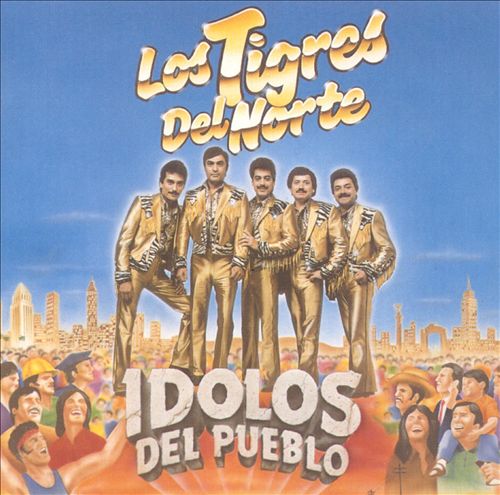
los tigres idolos

And not a moment too soon! The Singles Jukebox finally wrote about Los Tigres and their extended (and SAXY) pickup line “Qué Tal Si Eres Tú.” It’s an unorthodox introduction to their storied career, but in my opinion it’s as good as any:

…aka, the one where Hernán Hernández sings triplets, the one where Óscar Lara plays two different drum patterns, and the one with ALL THOSE MINOR CHORDS. I know I’m missing stuff, but after they’ve spent 40-odd years sifting through subtle shades of dry bounce, “Qué Tal” resembles a great Saguaro-like flowering of Los Tigres’ sound.

Fellow Jukeboxer Tara Hillegeist wrote well about the subtleties of bajo sexto playing and prompted me to listen again.

VALE LA PENA

Luis Coronel on The Singles Jukebox

Luis-Coronel1

If you felt an inexplicable throbbing in your heart earlier today, it wouldn’t hurt to get that checked out, but it could have just been the psychic palpitations that inevitably result when young Luis Coronel appears in the media, since we wrote about his single “Cuando La Miro” at the Singles Jukebox. Of course, if your heart is that affected by Luis Coronel, it wouldn’t hurt to get that checked out either. Sez me. I should probably go easy on the guy for a while:

I won’t sugarcoat it: this won’t be the last you hear from Luis Coronel. Triunfo magazine reports the bilingual Tucson teen plans to eventually “make the crossover and record in English.” His videos feature English-speaking restaurateurs, ’50s diners, and muscle cars, meaning he’s already singing to a bilingual U.S. audience; whether his crossover turns out to be Prince Royce-style assimilation, or the thing that finally drags banda/norteño music into Top 40’s embrace, is anybody’s guess. But no matter what Coronel sings, he needs to do something about his voice. Or lack thereof. Forswearing both the nasal whine and the overwrought (i.e., perfectly wrought) romanticism of his forebears, Coronel sings everything as though he’s reading the phone book. He can barely hang on to his songs. His hapless vocal cords tossed about by his (generally really good) arrangements, he makes even the simplest lines sound hard to scan. “Cuando La Miro” strands Coronel in his midrange; except for that shouted “Chiquitita!” he’s confined to six notes, none of which he projects over the brass. Maybe that’s why people love him? Like his unaffected peers Kevin Ortiz and Jonatan Sanchez, Coronel transforms music that’s often violent and racy into the endearing genre next door. He may someday portray the Pat Boone character in Elijah Wald’s How Calibre 50 Destroyed Narcocorrido.

Most other reviewers liked the song more: common themes included the goodness of the banda players and Coronel’s propensity to hide his vocals behind them. “Cuando” is currently #10 on Billboard‘s regional Mexican chart.

Things I Learned Listening to Javier Rosas This Weekend

otro golpe newBack in March NorteñoBlog was temporarily confused when the benevolent Fonovisa corporation re-released an old album by Javier Rosas y Su Artillería Pesada as though it was a new album.

otro golpe oldOtro Golpe originally came out in 2013 on whichever tiny label was releasing Javier Rosas albums at the time. Presumably nobody heard Otro Golpe that way, so Fonovisa gave it a new cover and distributed it to the masses to capitalize on Rosas’s minor radio hit, “Y Vete Olvidando.”

lleuge“Olvidando” came out late in 2014 as the second song on Llegué Para Quedarme, Rosas’s official Fonovisa debut. Three weeks after Otro Golpe dropped for the second time, Rosas got shot in an even more confusing scenario near a Culiacán mall. Since then he’s understandably dropped from sight, the better to hasten his recovery.

What’s not confusing is how good Rosas and his band are. I mean, the band’s named “Heavy Artillery”! (Also the best Mr. Lif song, imo.) They’re not as heavy as Noel Torres’s band — the drummer skitters more than pounds — but their dense interplay is similarly hard to fathom. And that density is the musical point. This took me a while to understand. Because Rosas’s songs have melodies and chords, you might expect those melodies and chords to be the point, the songs’ reason for being. As a songwriter Rosas has a welcome fondness for minor chords, and sometimes his tunes will run up to unexpected heights, and that’s all well and good, but Rosas’s corridos — and he’s in his element singing narcocorridos, not romantic ballads — primarily constitute a framework for himself and his band to demonstrate how badass they are. The Artillería Pesada accomplishes its badassery two ways: Rosas sings with amused gravity, because his crime stories intimate more than we’ll ever understand; and the band is a frightening rhythm machine.

How frightening? Like, they keep making me think of James Brown, everything subsumed to polyrhythmic whirl. The Pick to Click is still “Por Clave Llevo El 13,” a math-oriented tale of illicit doings and ne’er-do-wells, and the rhythm section — which is basically everyone except Rosas and the accordion player — achieves some math-rocking triplet-against-duple thing I’m still at a loss to fully understand. (Like, who’s playing the triplets? Is it just the accordion riff, or are those constant skittering snare rolls part of the “three”? The tuba is clearly subdividing in two or four.) Rosas is no Brown, but storytelling is a different task than whatever you’d say James Brown does. Rosas rides the rhythms with authority, without even seeming like he’s trying to ride them. He just tells stories, man; the band plays an audible expression of whatever violent turmoil Rosas won’t allow himself to state outright.

Track-to-track comparison reveals that Otro Golpe is better than Llegué, because Llegué contains a couple slow songs that stretch out and unwind the band’s dense rhythm attack. Not that the band couldn’t put over slow ones, but so far they don’t. The comparison also reveals Rosas is very consistent — the third track of each is devoted to a femme fatale/trap queen figure named “La China”. Both albums close with cumbia medleys — “popurris” — and the one on Llegué goes on way too long.

NorteñoBlog’s Top Singles of 2015: Enero – Marzo

marco flores

As you listen to this Youtube playlist, imagine a Regional Mexican station that plays not just regional styles, but disco-fied international variations on those styles. Weirdly enough, the disco-mariachi songs here, while great, are far from the most danceable songs on the list. If you don’t believe me, check out the top video, where Marco Flores and his band create a barrage of anarchic polka moves, including Hiding Behind the Congas, for their banda-fied take on the Zacatecas state’s tamborazo music. Colmillo Norteño aren’t quite as terpsichorially ambitious with the waltz at #2, but they’ve still got moves.

You could call these the year’s best regional Mexican singles, but there’s a catch. “Regional Mexican” here includes Mexicans and non-Mexicans playing their takes on regional styles — norteño, banda, mariachi, and cumbia (not native to Mexico, but nation and format have embraced it), along with minor styles like Tejano, tierra caliente, and duranguense, if we’d found any. It doesn’t include Mexicans playing pop, although most of these songs register for listeners as pop songs. It also doesn’t include any Latinos playing reggaeton, bachata, or salsa, though NorteñoBlog broke that rule last year when Gerardo Ortiz released a full-throated bachata song.

Maybe not so weirdly, this list’s Venn diagram circle for “international interlopers” — Natalia Jiménez, Rocio Quiroz, Jenny and the Mexicats, and Shalia Dúrcal — overlaps perfectly with the circle for “women.” It’s not that women can’t make great music that’s puro Mexicano; after all, we’re observing the 20th anniversary of Selena’s death, the 10th anniversary of Yolanda Perez’s fantastic Esto Es Amor album, and also check out NorteñoBlog’s best of 2014 list. But in the recently dominant styles of norteño and banda, the male gaze and traditional, possibly smothering, notions of chivalry predominate. Women in song lyrics often have the upper hand over their hapless male counterparts — see the hilarious video for “Adicto a La Tristeza” — but the hapless males still make most of the music and money. Though she’s not on this list, check out América Sierra’s “Ponte Las Pilas” for a refreshing exception — she also wrote Ortiz’s latest single, “Perdoname” — and keep your eye on her this year. In the meantime…

1. Marco Flores y La Número 1 Banda Jerez“El Pajarito” (Remex)
We’ve admired before the vitality of Marco Flores‘s dance moves and his voice, a gallo-rific crow that cuts through anything in its path. His take on Espinoza Paz’s “El Pajarito” comes in versions both “sin censura” and, presumably, censura.
Mexican radio hit

2. Colmillo Norteño“La Plebona” (Remex)
A demented rapid-fire circus parade waltz — you like those, right?
U.S. radio hit

3. Natalia Jiménez“Quédate Con Ella” (Sony)
Spanish pop star Jiménez shoots for Mexican mariachi and, with the help of Venezuelan producer Motiff, winds up singing a marvelously square ABBA breakup ballad. She’s having more fun breaking up than she did when they were together. She’s Chiquitita with Fernando’s swagger.
Mexican and U.S. radio hit

4. Rocio Quiroz“La De La Paloma” (Ser)
A minor key stomp with its drums slightly off-kilter in that delicious cumbia manner. The guitar tone is like something out of ’80s new wave, and Argentine singer Quiroz sounds great spitting out heartache.
hasn’t charted

5. Alfredo Ríos El Komander“Fuga Pa’ Maza” (Twiins)
Alfredo Ríos El Komander (I guess that’s what we’re calling him now?) continues to fire off charming singles that sound like he wrote them on a napkin and recorded them in the back of the bar. This one makes the theme explicit. It’s a drinking song whose background crowd noises exist as much for their musical energy as their verisimilitude — note how the crowd abruptly shuts up mid-whoop at the end of the song, rather than fading into a jumble of congratulatory high-fives. “Mi vida es pura pura pura borrachera,” Ríos brags, his tuba and requinto (I think) players capering around the bar, spilling everyone’s drinks.
hasn’t charted

6. Grupo Cañaveral ft. Jenny and the Mexicats“Tiene Espinas el Rosal (En Vivo)” (Fonovisa)
Grupo Cañaveral De Humberto Pabón played one of their turn-of-the-millennium cumbias, “Tiene Espinas El Rosal,” in concert. They brought out the little Spanish/Mexican indie band Jenny and the Mexicats to sing it with them. It turns out I’m a sucker for both turn-of-the-millennium cumbias and Jenny and the Mexicats.
Mexican radio hit

7. Shalia Dúrcal“No Me Interesa” (EMI)
The Spanish singer’s latest blends Nashville guitar licks, ranchera horns, and electropulse into something that never peaks but is more compelling for it. Also check out “Has Sido Tú,” a tech-folk-ranchera stomper whose main riff is lifted directly from one of Slash’s solos in “Sweet Child o’ Mine.”
hasn’t charted

8. La Trakalosa de Monterrey ft. Pancho Uresti“Adicto a la Tristeza” (Remex)
It turns out Edwin Luna, lead singer of La Trakalosa de Monterrey, is very convincing portraying un “Adicto a la Tristeza.” It helps that his voice chimes like a throaty bell. Luna’s labelmate and guest singer, Pancho Uresti from Banda Tierra Sagrada, is somewhat less convincing because his voice is scratchy. When the woman in the video spurns his advances, he’ll feel nothing and should be able to pick up pretty easily with someone else. High camp.
Mexican and U.S. radio hit

9. Los Tigres Del Norte“Qué Tal Si Eres Tu” (Fonovisa)
This study in triplets — the musical figure, not the polyzygotic phenomenon — still sounds better every time I hear it. Any other late ’60s bands still going this strong?
Mexican and U.S. radio hit

10. Rosendo Robles“Alterado De Corazon” (Rosendo Robles)
A banda waltz of furious excitement and possibly sharp brass sections. Possibly tuned sharp, I should say, although the jagged horn rhythms certainly feel like whirling blades of death, the kind of things you’d contort your shoulders trying to avoid in the upper reaches of a video game.
hasn’t charted

11. La Maquinaria Norteña“Si Te Vuelvo a Ver” (Azteca)
A stomping country polka with some puro Chihuahua sax, by way of New Mexico. I want La Maquinaria Norteña’s logo on my windshield.
Mexican and U.S. radio hit

12. Mario “El Cachorro” Delgado“El Rancho” (Garmex)
A sad but swinging protest corrido using chicken farming as a parable about Mexican kidnapping violence, I think. The simple tune is appealing enough, but check out the interplay between bass, guitar, and requinto, alternately locking in together and tugging at the rhythm with passages of loose virtuosity.
hasn’t charted

13. Alfredo Rios El Komander“Malditas Ganas” (Twiins)
Tossed off kiss-off. The eternally loose Ríos sprechtstimmes and casually mentions “Soy De Rancho,” reminding the woman he can’t forget that nobody can forget him these days, either.
Mexican and U.S. radio hit

14. Diego Herrera ft. Los Gfez“Es Todo Un Placer” (Remex)
One of those norteño quartet-meets-banda mashups the NorteñoBlog loves.
Mexican radio hit

15. Remmy Valenzuela“Mi Princesa” (Fonovisa)
A dextrous accordion hero puts down his axe to sing a banda ballad with more authority than he’s ever sung before, enunciating to las estrellas. Has any guitar hero ever done so well with a guitar-free power ballad?
Mexican and U.S. radio hit

10 more good ones:

Miranda Lambert – “Little Red Wagon” (RCA Nashville)
Los Teke Teke – “Me Dite Duro” (Leo)
Nicki Minaj ft. Drake and Lil Wayne – “Truffle Butter” (Young Money/Cash Money/Republic)
Joey Bada$$ – “No. 99” (Cinematic/Relentless)
Sia – “Elastic Heart” (Monkey Puzzle/RCA)
Susanne Sundfør – “Delirious” (EMI Norway)
One Direction – “Night Changes” (Columbia)
Fetty Wap – “Trap Queen” (300)
Carrie Underwood – “Little Toy Guns” (Sony Nashville)
Victor Manuelle – “Que Suenen Los Tambores” (Sony)

Maná ft. Shakira at the Jukebox

mana

“¿Cuál es la verdad?” Pilato le preguntó a Jesús. Yo olvido como Jesús respondió, pero Maná y Shakira dicen, “ eres mi verdad.” ¡Herejía! (Tú también eres otras cosas: su amór, su alegría, su sandwich, etc…) Al Singles Jukebox, pensábamos que la canción fue aburrida; yo escribí:

A friend from high school affectionately calls Maná hippy music, lumped in with Bacilos and Juanes, both of whom I prefer. I can see it, though — they’re sick and tired of hearing mentiras from neurotic, psychotic, pig-headed dictadores, just give them some verdad. Gently, please. See also the video where the band and pregnant Shakira sing around trash can fires in the last outpost of civilization. (It’s either that or a closed banquet hall with unorthodox chair stacking methods.) As always, there’s pleasure here, mostly in hearing Fher Olvera’s instantly recognizable voice trace a sturdy melody; I also smiled at Shakira’s sighs of “ay, ay, ay.” But as usual, it’s hard to remember their verdad once the next batch of liars comes along.
[4]

The GLAADness of Los Tigres

LOS-TIGRES-DEL-NORTE1-650x400

Good for them!

Los Tigres del Norte are making history today. The San Jose, Calif.–based norteño group are receiving a Special Recognition (Spanish Language) award from GLAAD for “Era Diferente,” a song on their newest album, Realidades. The song is about a lesbian teenager who falls in love with her best friend. It’s the first song about gay love in the band’s 47-year history…

“Era Diferente” translates to “She Was Different,” and is about a young girl who struggles with boys fighting for her attention. “They make bets for her affection,” sings Hernandez, “but none of them win her love … She was so different from the other girls because she was never interested in a boy’s love.”

The song itself, since you’re wondering, is cheerful pop-rock, with a backbeat and everything, as catchy as anything else on Realidades. In other news, every day I grow more certain that I underrated Realidades last year.

As for the song’s reception, the Youtube comments showcase a couple of the expected “abomination”-baiters, but on the whole I can’t imagine anyone being too surprised or upset with Los Tigres. The band has a long history of supporting sensible immigration policy and basic human decency, while singing out against North America’s more stupid immigration and drug policies. Even with some badass narcocorridos in their repertoire, they seem like polite liberals. (This Gustavo Arellano listicle remains the single best overview.) In the above article, singer/songwriter/accordionist Jorge Hernandez says, “Sometimes in the Latino community we see machismo and problems with acceptance, but this is an area where acceptance is the most important because this is such a large community and we must accept people who love each other and live normal, happy lives.” “The NPR of norteño,” suggests my friend Anthony.

I’ve likened Los Tigres to Springsteen before and I’ll do it again. They came up around the same time, in the late ’60s and early ’70s. Their detailed story songs make larger points about politics and society. Drawing on their respective traditions, their music has moved más allá de tradición, to the point where they embody their genres. Just as Reagan couldn’t escape Springsteen, socially conservative norteño fans can’t escape Los Tigres, even if they wanted to. I bet most of the cops who turned their backs on “41 Shots” remained Springsteen fans. At some point fans accept that these guys will always speak for them like nobody else can, never mind the small disagreements.

Estamos Escuchando a Victor Manuelle

VÍCTOR-MANUELLE-comienza-el-2015-con-pie-derecho

La semana de pasada en la Singles Jukebox, escribimos sobre Victor Manuelle y su electro-salsa canción “Que Suenen Los Tambores.” ¡Nos gustó! ¡Pero nos hizo cansado! Sobre todo si se escucha al versión más rápido y, como Madeleine Lee, empieza a bailar alrededor de su cocina (en la luz del refrigerador?)… ay. Cuidado.

Sin embargo, VALE LA PENA. Escribí:

Incorporating the traditional “Sister Havana” chord changes, the latest tropical (and sort of topical) #1 from Bronx native Manuelle is a cover of Cuban singer Laritza Bacallao. Manuelle’s version seems to accelerate as it rolls along, bulging with more cool electro-salsa effects and backup vocal parts the further it goes. Something new crops up every moment; listening to it may be as exhilarating and exhausting as dancing. Yet Manuelle counsels patient resistance and claims in the first verse, “No se trata de velocidad.” Hurry up and relax. There’s no time to lose; we could have a holiday.

Create a free website or blog at WordPress.com.

Up ↑